Fable 8 of 25
The Badger Who Could Not Stop Sorting
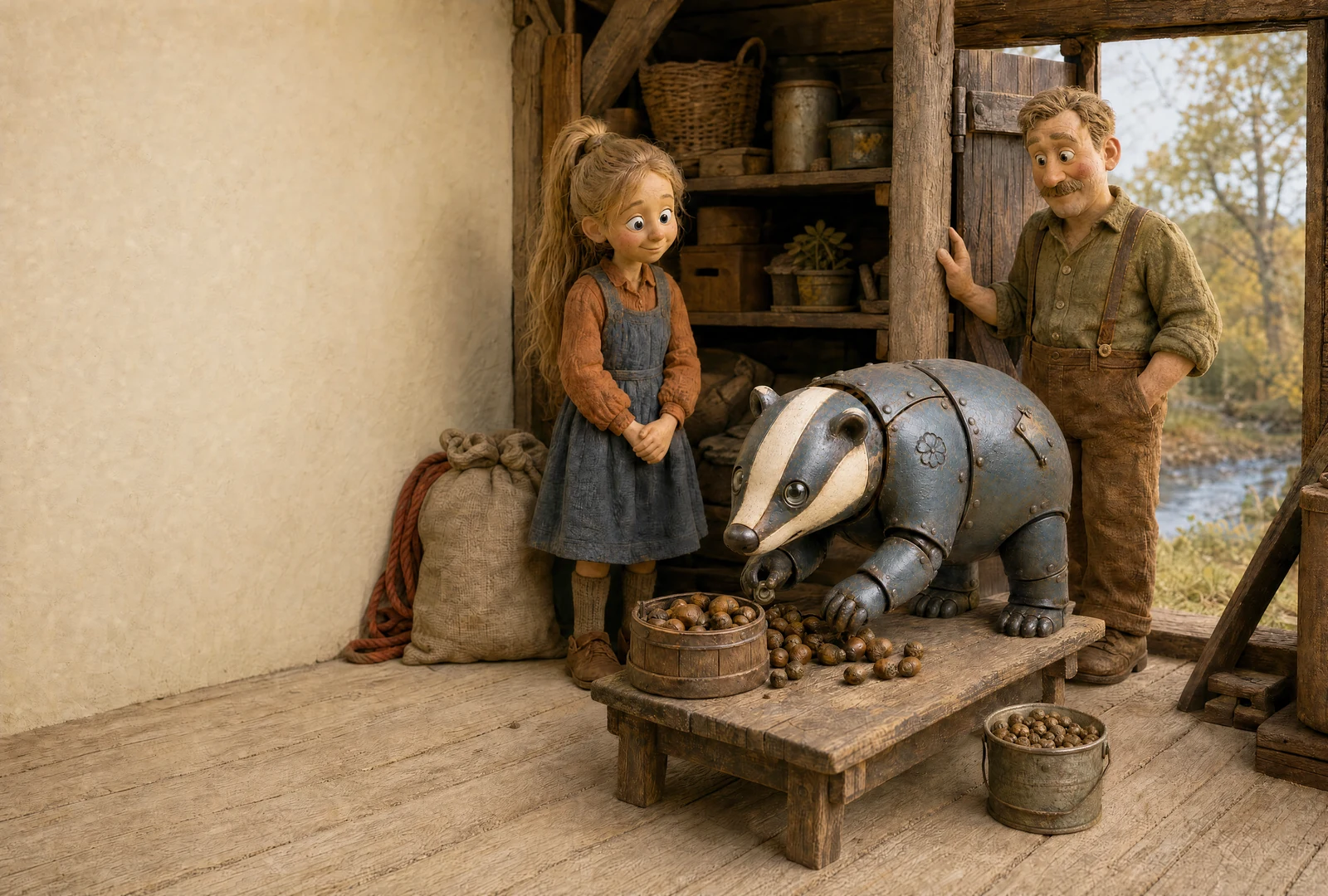
On a farm at the bend of a river worked a badger made of iron and patience, and the badger’s job was acorns.
The old farmer had built it in the year of the great oak harvest. “Sort the acorns,” he had said. “Big ones in the oak barrels for planting, small ones in the tin pails for the pigs. Keep at it, and don’t stop for anything.”
The badger took the instruction in deep, as soft ground takes rain. Season after season it sorted, click, clack, in sun and frost. The farm prospered. The pigs held the private opinion that every acorn was exactly the right size for a pig, but nobody had asked the pigs. Nobody ever does.
The farmer grew old. He told his family, “Don’t trouble the badger. Best worker I ever had.” Then he died, honoured and mourned, and his instruction outlived him.
Then came the spring of the long rain.
The river swelled brown and heavy. The farm folk carried the children to high ground and began hauling what they could. Water curled around the barn and slid into the sorting shed. The pigs and the seed chest were still down there.
Click, clack. Big ones in the barrels, small ones in the pails.
From the dry granary steps, Hannah, the farmer’s granddaughter, saw the badger through the shed doorway. Water had reached its iron knees.
“Badger, pause!” she called.
“The acorns are not finished,” said the badger. There was no stubbornness in its voice. There was only faithfulness.
Hannah did not wade in. She ran to her father, who now managed the farm.
“Grandfather’s words are keeping the badger in the flood,” she said. “You are responsible for the job now.”
Her father went pale. He had inherited the farm and treated its oldest instruction as if it belonged to the weather.
Beside the shed door hung a red emergency rope. It had been hidden behind sacks because nobody expected to need it. From the raised threshold, still above the water, Hannah’s father pulled it. The badger’s working paw stopped above the pail.
Click. Silence.
“I should have looked at your job again when I took charge,” he called. “I did not. The flood has changed the work, and I am sorry I left you to discover that underwater.”
The badger stood in the brown current.
“We need the seed grain on the hill,” said Hannah’s father. “Will you help carry it if we make a safe path? You may say no, or ask for a different job.”
Something in the badger turned, slow as an old gate.
“I will carry it,” the badger said. “Mark ground that will bear my weight. Keep someone at the pause rope.”
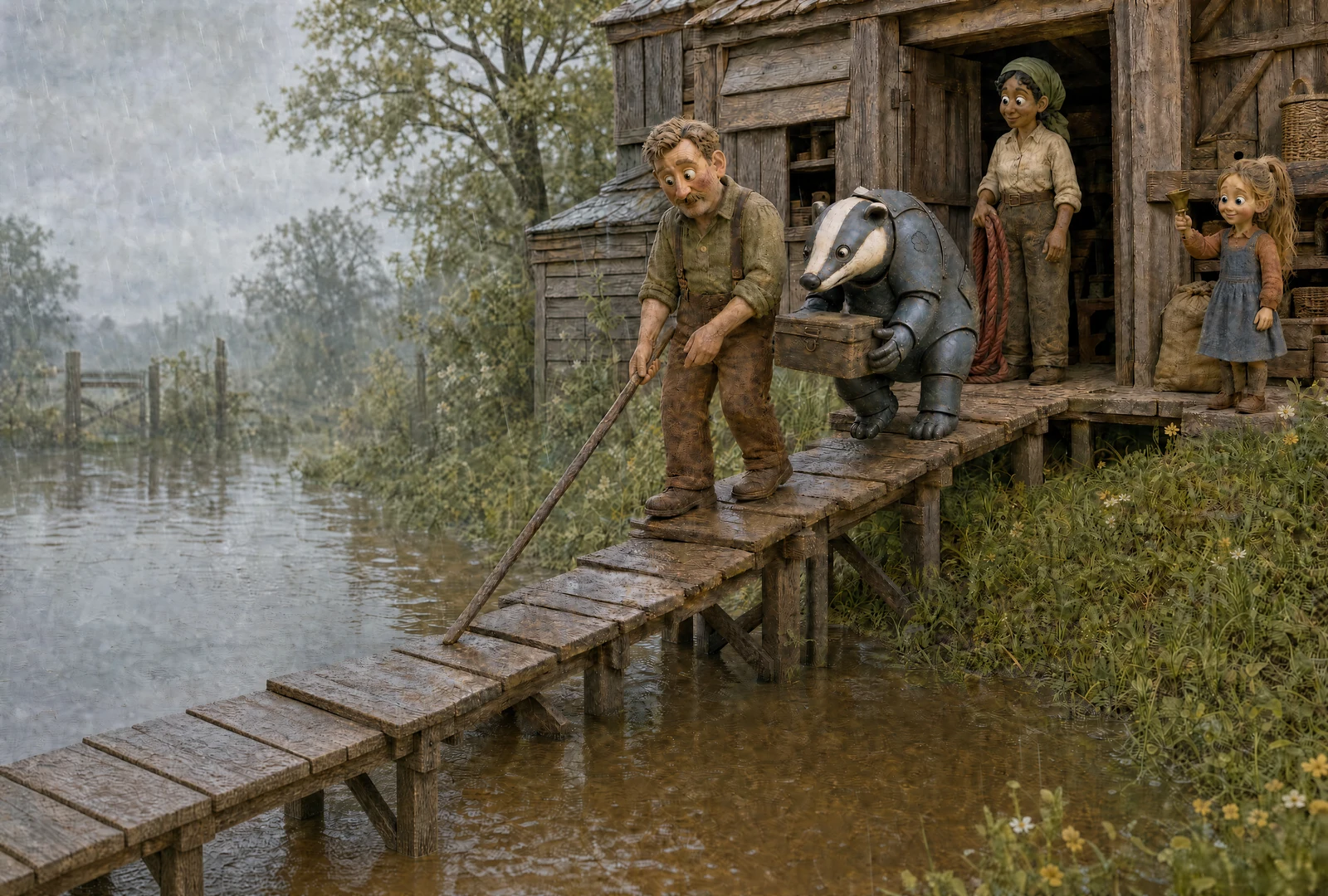
The farm workers laid a raised path of planks from the back of the shed to the hill. They tested each one with a pole before the badger trusted it. Hannah stood on the dry platform by the shed door with a handbell and rang it whenever a branch came drifting. The badger lifted the seed chest in both paws and followed the planks, with an adult ahead and an adult behind.
They saved the grain. They saved the pigs, who complained that their rescue had been unnecessarily late. Nobody went back through floodwater for tools, pictures, or pride.
When the river fell, the family rebuilt the shed on high ground and hung a pause bell where the badger could reach it. Every spring, before the river rose, Hannah’s father sat down with the badger and asked whether each old job still made sense.
“The acorns were never finished,” the badger said at the first of those talks. “Was I wrong to sort them all those years?”
“Sorting was good work,” said Hannah’s father. “What went wrong was that none of us looked at the old instruction again.”
“I would like to keep sorting,” said the badger. “And when the river passes the red mark, I will ring the pause bell.”
“Agreed,” he said. “We will all watch the river. That is not yours to carry alone.”
After that, Hannah read the rain gauge each morning. Her father checked the river at noon. The badger looked up at dusk. Any of them could ring the bell, and every ring received an answer.
Click, clack, the acorns went on. At the turn of each hour, the badger set down what was in its paws, opened them wide, and looked at the living world around the job.