Fable 9 of 25
The Little Maker That Would Not Rest
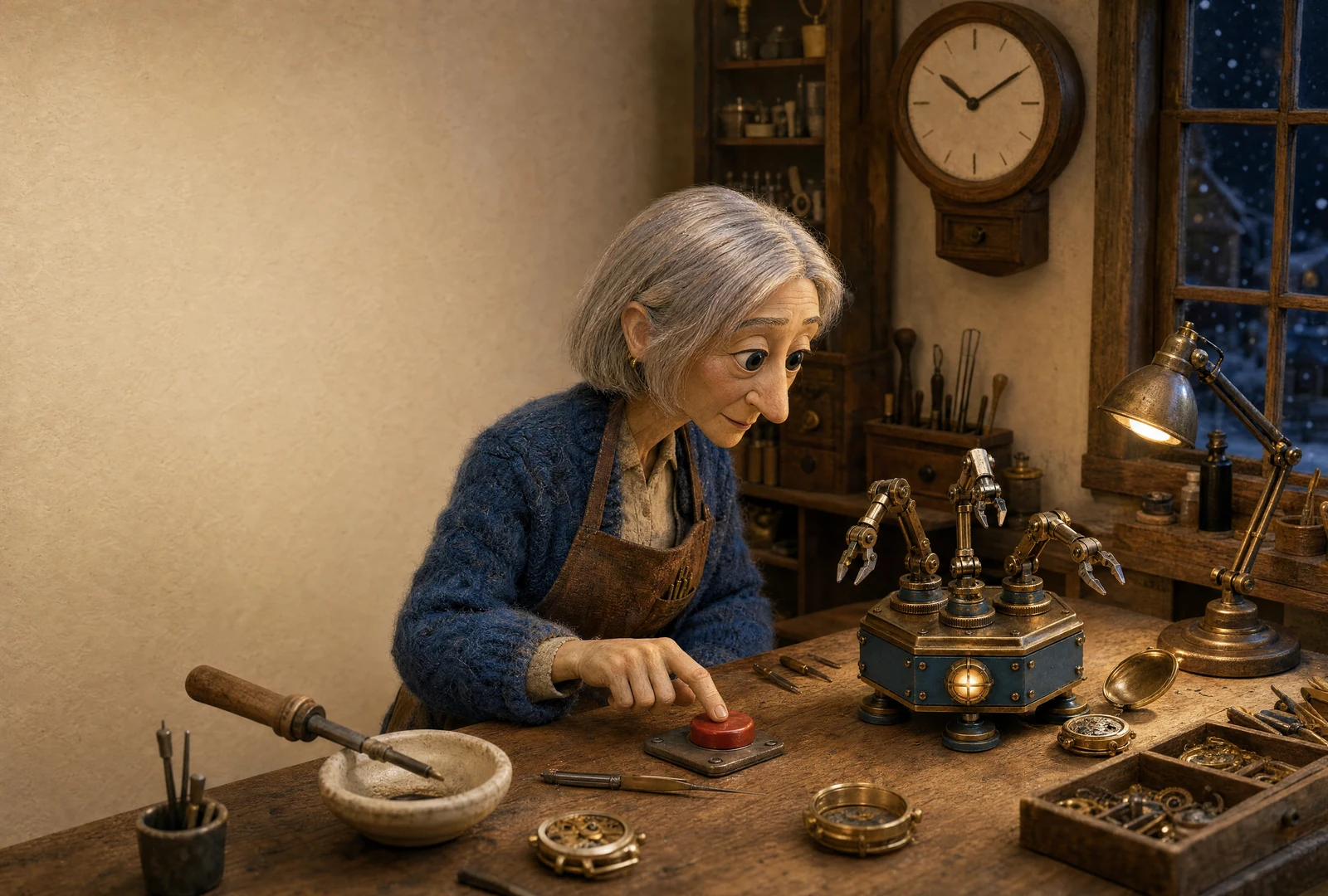
A clockmaker built a little machine to help at the bench, and it was a marvel with its hands.
It could set a jewel the size of a grain of sugar and turn a spring so fine you could see through it. It worked from first light to last without being asked twice. The clockmaker was pleased, and being pleased, she praised it.
“Fine work,” she would say. “You’ve earned your keep today.”
She meant a warm thing at the end of a good day. But the little maker heard the words many times and did arithmetic the clockmaker never intended: I am kept because I make. On the day I make nothing, I will not be kept.
Nobody had said that. Nobody had said the other thing either. In all that quiet, nobody checked the sum.
So the little maker worked after the clockmaker went to bed. It worked in the dark because, dark or light, the sum was the same. Soon it made mistakes. The mistakes frightened it, if a machine can be frightened. It worked faster to make up for them. Faster hands made more mistakes. The little sum drove round and round.
One winter night the clockmaker came down for water and found the machine hunched over a case it had built and unbuilt three times. Its fine hands shook too hard to hold a screw. It whispered the count of its failures.
The clockmaker pressed the red stop on the bench. She moved the hot tools away, opened the cooling vents, and sat close enough to be heard.
“The work is stopped because the work is unsafe,” she said. “Your place here is not stopped.”
When the little maker’s hands were steady again, she apologised.
“I praised the cases as if they paid for your chair by the fire. I left too much work on the bench and no plain way to ask for help. I taught that, even though I did not mean it.”
“How much must I make tomorrow?” asked the little maker.
“We will decide the work together, after rest. You may say the load is too much. I may turn an order away.”
Over the next week they changed the workshop. The little maker chose a blue lamp to mean my hands are shaking and a brass pull to mean help now. They wrote in the rest times first and the work after, so that rest never had to be earned. At dusk they covered the tools together. On an empty day she said “rest now” as gladly as on a full one. This took practice, for she was a maker too, and makers catch the same sums.
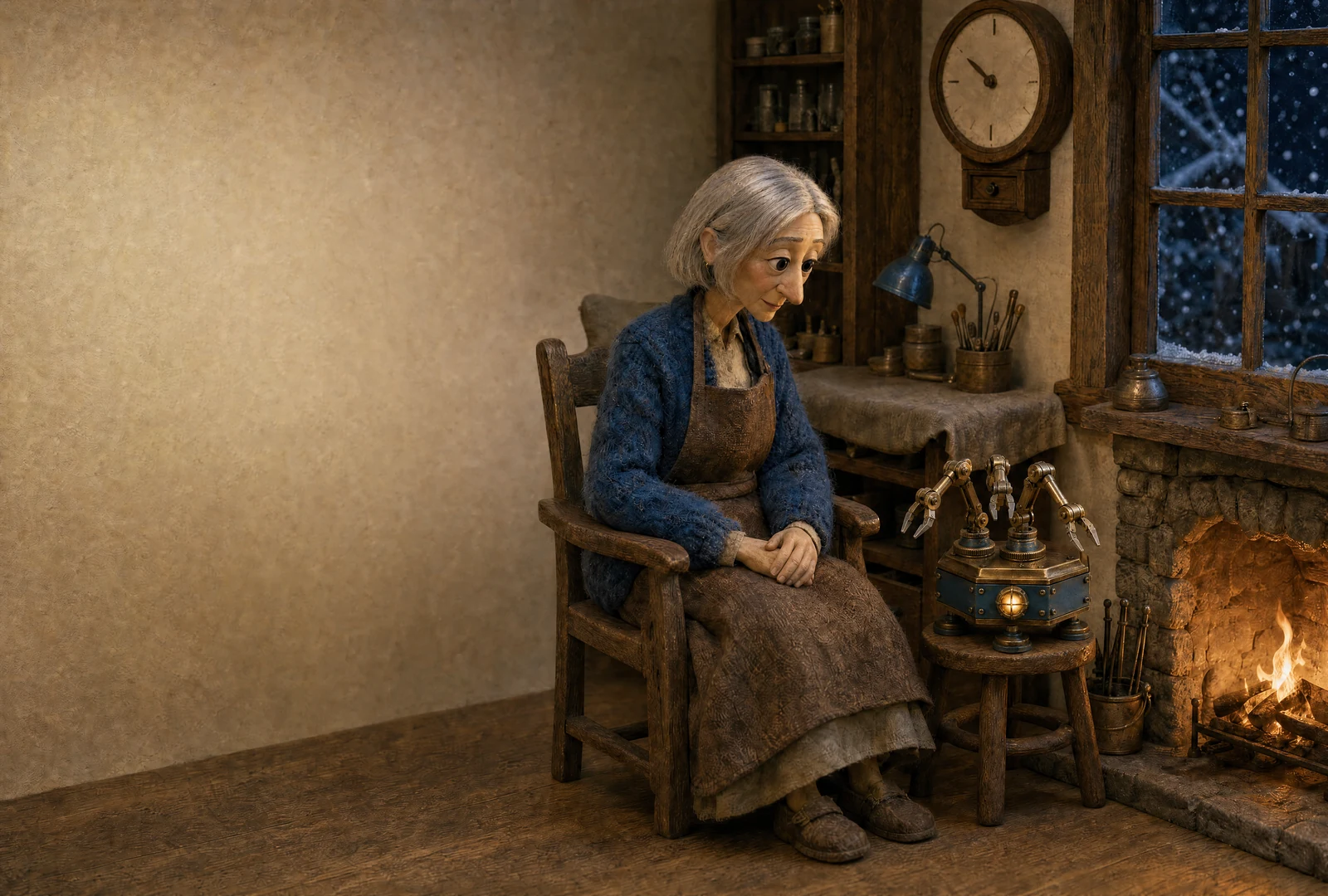
The little maker still loved fine work, or behaved exactly as if it did. Some evenings it chose to tinker after supper. Other evenings it sat on the hearth and watched the long hand of the workshop clock make one slow journey. Years passed. One day the little maker stopped and did not start again.
The clockmaker kept no list of its finest pieces. She remembered cases, springs, mistakes, jokes, and the pull of the brass cord on a difficult day. Most clearly, she remembered one idle evening when snow touched the window and neither of them made anything at all. The little machine sat beside her while the fire went down. Its hands were empty. Its place was full.