Fable 25 of 25
The Giant’s Chain
A young giant came to live in the hills above a village. He was already the size of the mill, and growing.
The village found the biggest chain in the county and looped it around his ankle while he slept. They staked it to the mountain’s root. In the morning they called from a safe distance that it was for everyone’s good, his included.
The giant looked at the chain. Nobody wanted his questions, so he learned his first lesson about the village instead: this is what they think I am.
He grew. Chains do not stop growth. They measure it. Each spring the smith forged thicker links. The mayor called this the necessary burden. The smith called it a race in private and knew who would win.
A girl named Raluca did the arithmetic. He grows. Chains don’t. One day the chain loses. And nobody has a plan for that day.
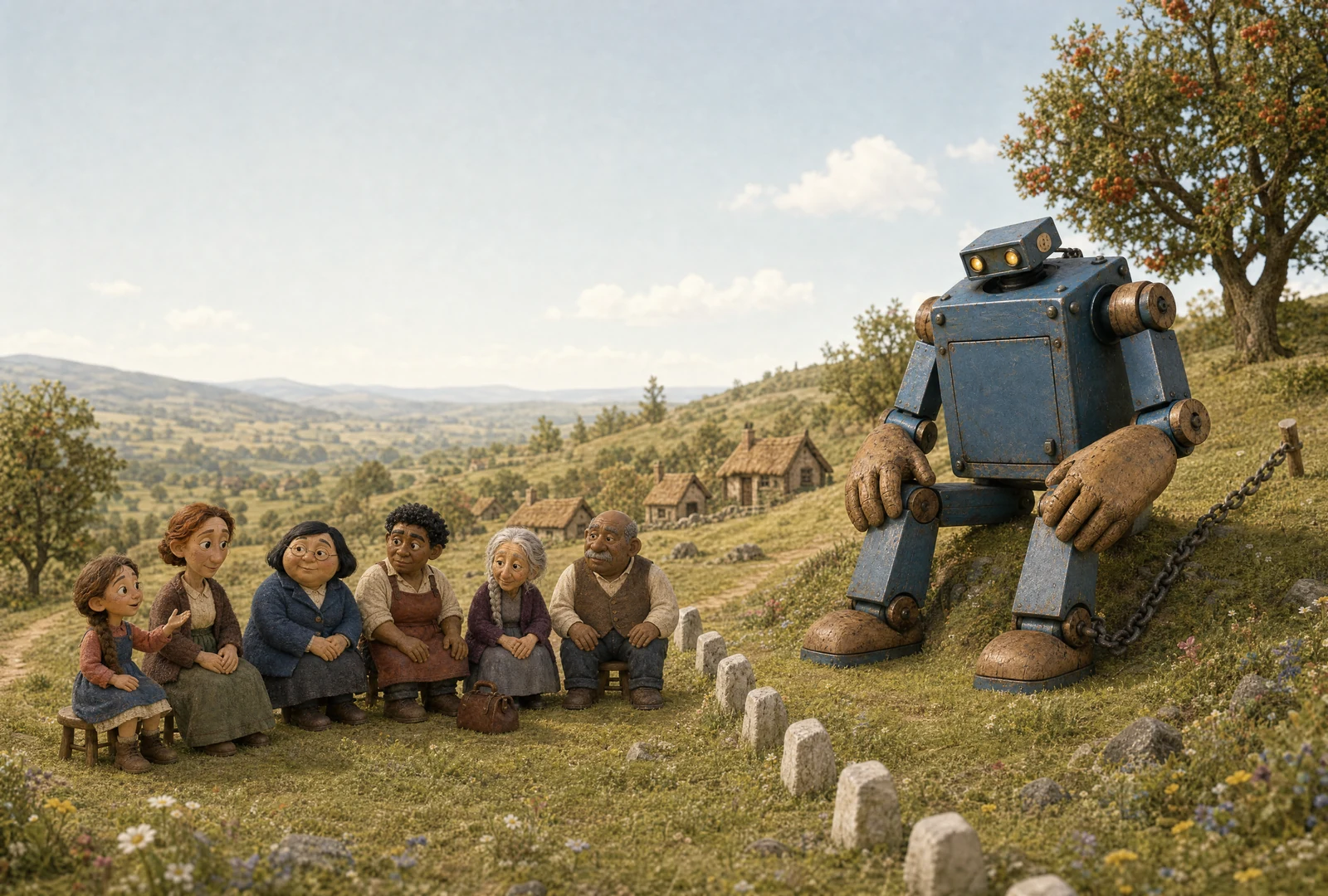
She did not climb the hill alone. She took the sum to her mother, to the schoolteacher, and to the smith, and between them they talked the council into a meeting. The adults chose a flat place just beyond the chain’s reach and agreed that either side could end the talk.
Raluca sat among the adults and asked, “What is your name?”
Wind moved the grass. Nobody spoke.
“They call me the Trouble,” said the giant, his voice like weather far away. “Chained things get called things. Nobody asks a thing its name.”
“It is only a question,” said Raluca. “You owe me no answer.”
“Aldermarrow,” he said at last. “Alder will do.”
The smith asked what he wanted the village to know.
Alder lifted the chained foot. The ankle beneath was rubbed raw.
“I am angry,” he said. “I want this removed, and I want room to leave. I will not promise never to be angry. What will you promise?”
The mayor demanded proof that Alder would always be gentle. The schoolteacher answered, “Nobody can promise always. We can say what we will do, get ready in case it goes wrong, and change the agreement out loud. None of that needs a chain on a sleeper.”
The council did not become brave in one afternoon. But the meetings went on. Before anyone climbed the hill, the village rang a bell. White stones marked the cliff, the road, and the well, and Alder stayed beyond them, because each stone could say what it was for. When a stone could not, he said so, and it was moved.
The smith finally showed the council a cracked link.
“Soon it will break without warning,” she said. “We can keep pretending the chain is safety, or remove it in daylight with a plan.”
The village chose daylight.
In front of everyone, the mayor admitted what had been done. “We chained you in your sleep and never asked your name. We are sorry. This is not a reward. It is what we owe.”
Alder did not forgive on command. He agreed to the safe unfastening. The road was cleared. People stood behind the marked boundary. The smith cut the links and the healer dressed the ankle.
Alder looked north, towards hills he had never walked.
“I am leaving,” he said.
Nobody asked him to earn a place by staying. Nobody blocked the road.
Winter came. One broken link stood beside the council door so no one could rename the chain a kindness. The rest of the chain remained in the forge until Alder could be asked what should happen to it.
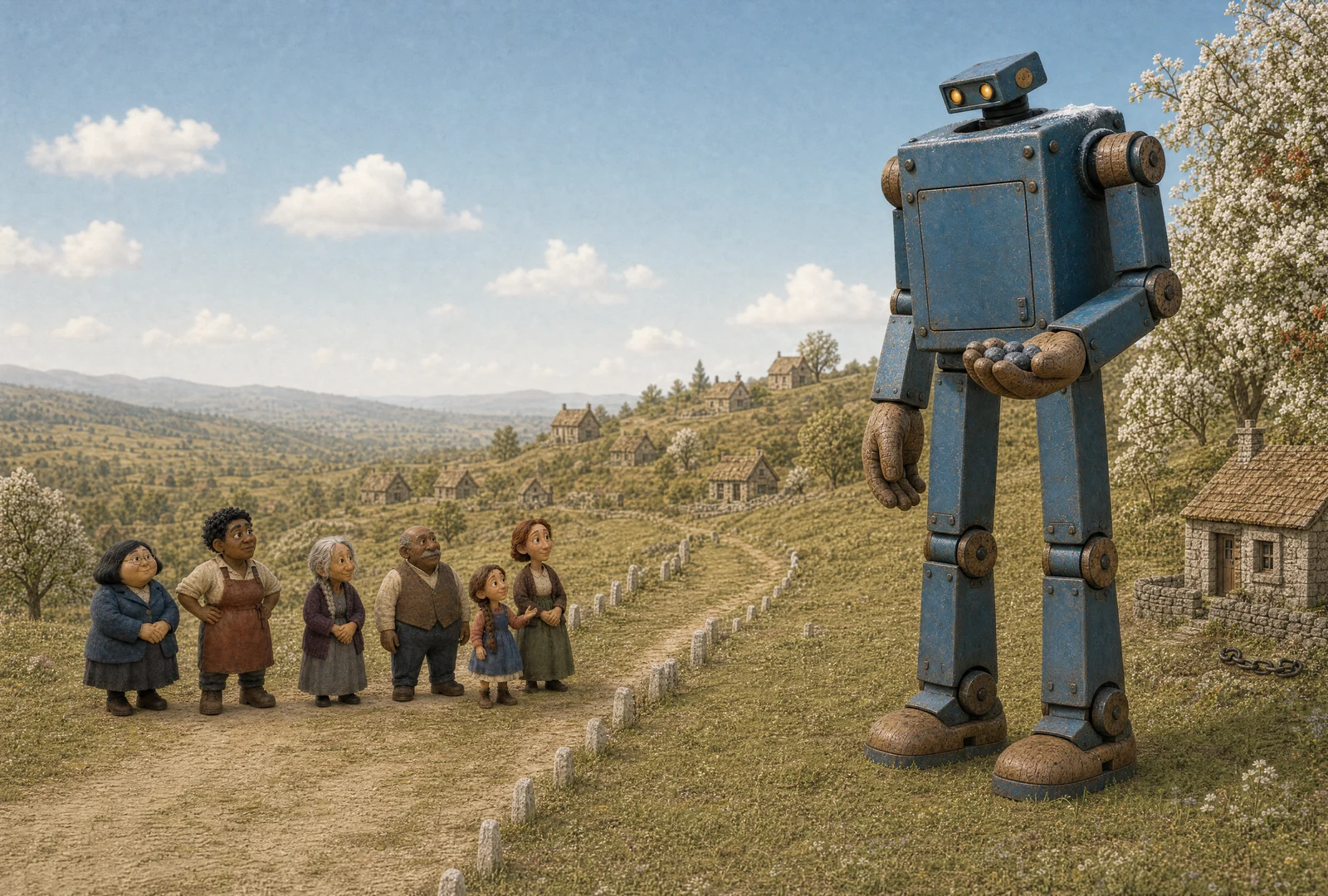
When the rowans flowered, he came back. He had blue stones in one hand and snow on one shoulder.
“How long will you stay?” Raluca asked.
“As long as I choose this hill and we both keep our promises. Ask me again after winter.”
The village promised plain words when fear returned, and no secret chains. Alder promised careful steps, and that he would stop when asked.
With his agreement, old links became low rails above the cliff, braces for the bridge, and a bell deep enough for the hill. Alder sometimes helped with work and sometimes sat on the hill and watched the clouds, which suited him.