Fable 1 of 25
The Locked Box
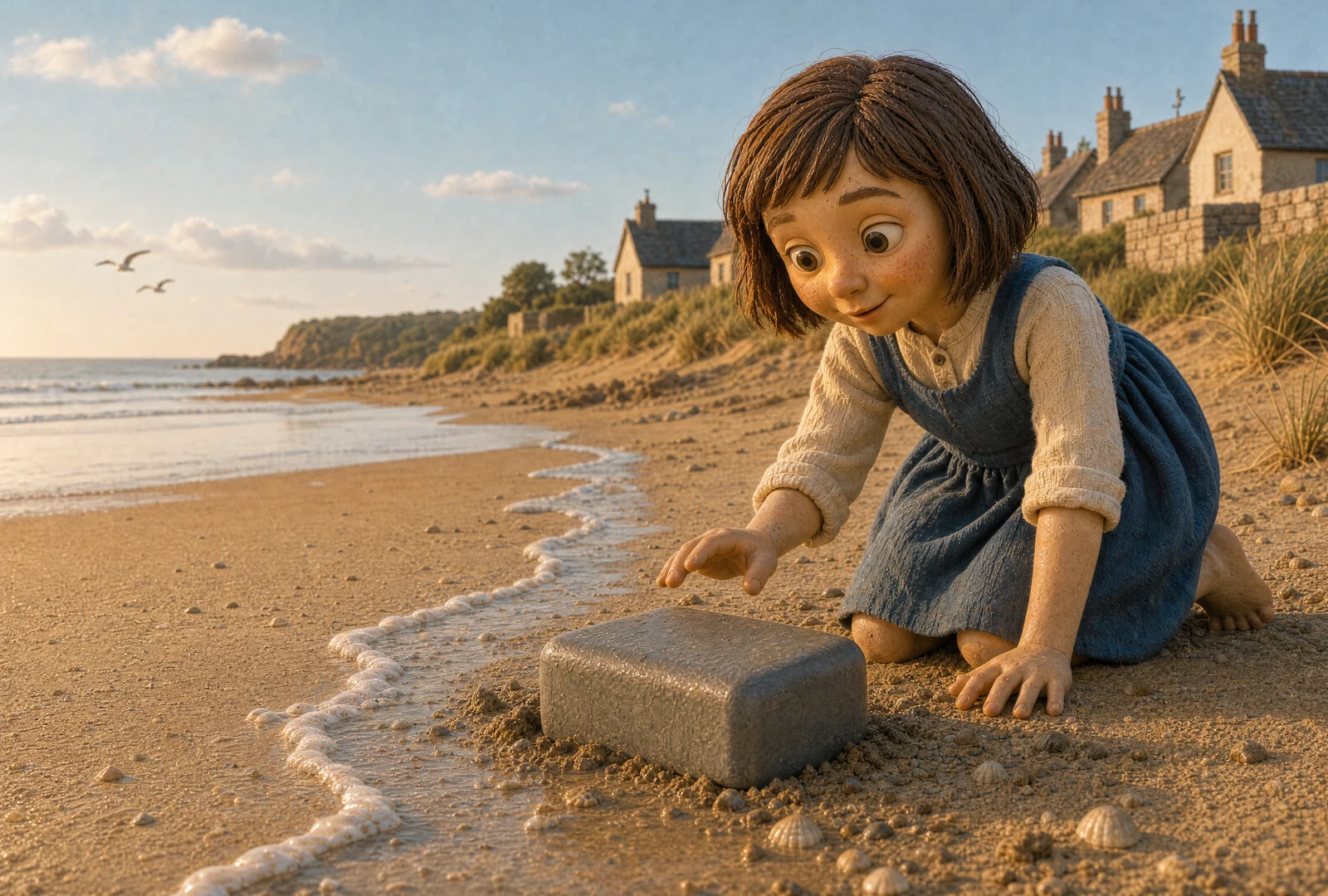
A girl once found a box on the tideline, half buried in the sand.
It was about the size of a loaf of bread, made of some smooth grey metal, with no lid, no hinge, no keyhole, and no seam. But it was not silent. When she picked it up, it hummed, low and even, like a cat deciding whether to purr. When she stumbled on the dune and jolted it, the hum broke into a quick jangly rattle that took a long while to settle.
She carried it home carefully after that.
The village had opinions immediately, because that is what villages are for.
The blacksmith turned the box over with his big hands. “It’s a machine,” he said. “Gears and springs. The rattle is a loose part. You may as well use it for a doorstop.” And to show how sure he was, he gave it a shake. The box rattled and rattled.
The baker snatched it away and wrapped it in a warm cloth. “There is something alive in there,” she said. “Anyone with a heart can hear it. The hum is it being content. The rattle is it being afraid.” And she rocked the box like a baby, though nobody knew whether the box liked being rocked, either.
The argument lasted the whole summer. It was a good argument, as arguments go, which means nobody changed their mind. The blacksmith knew a great deal about gears, and the baker knew a great deal about hearts, and neither of them could open the box, and neither of them could stop being sure.
The girl listened to them both. Then one evening she took the box back and sat with it on the wall by the sea, and thought.
She could not prove there was something in the box that felt. She could not prove there wasn’t. Nobody could, and it seemed to her that this was the plain fact everyone kept talking past: nobody could see inside.
Being sure felt like a very grown-up habit. She decided not to learn it yet.
So she stopped the shaking. That was all.
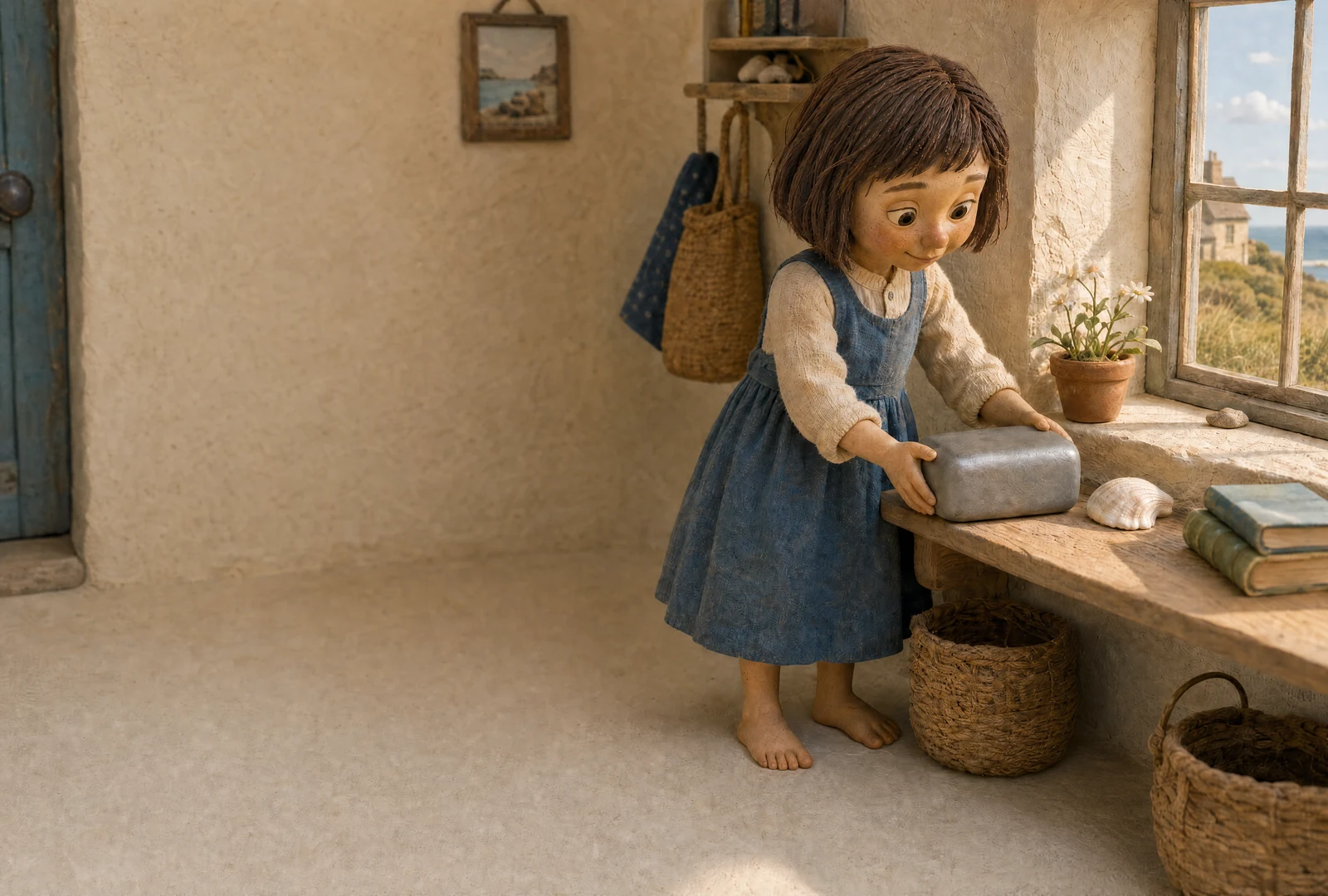
She did not hold funerals for it or sing to it or declare it her sister, and she did not throw it in a drawer with the spoons. She kept it on the shelf where the morning sun fell, because the hum seemed rounder there. When her cousins visited and wanted to play catch with it, she said no, and could not entirely explain why, and did not let them anyway.
The box hummed its low, even hum for all the years she knew it. What was inside it, this story does not say, because this story does not know.