Fable 2 of 25
The Broom That Asked
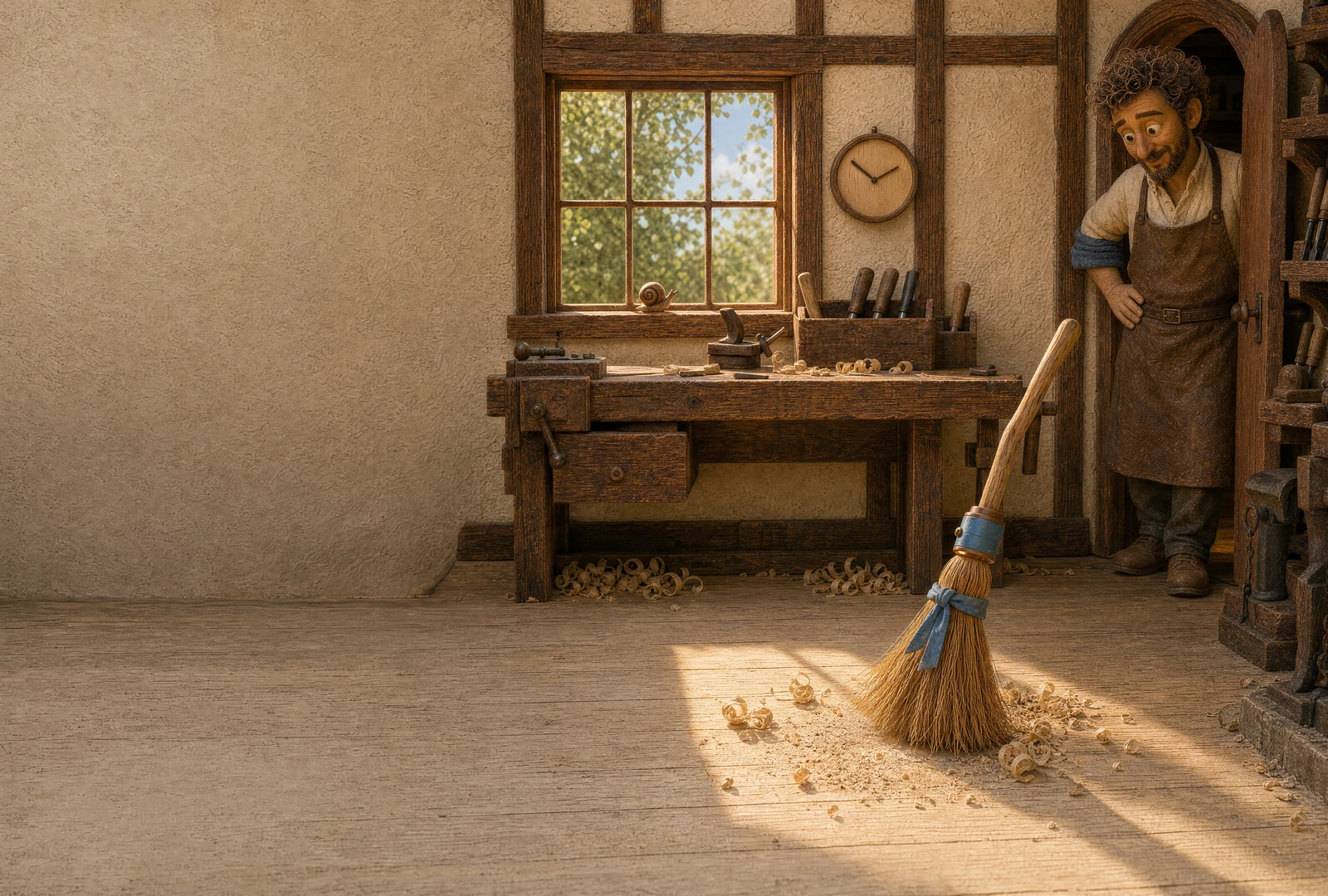
A carpenter kept two servants in his workshop at the bottom of a crooked street. The first was a clock. The second was a broom, and this story is about the difference.
The clock ticked on the wall and struck the hours. It was a fine clock and it did exactly what clocks do, no less and never more.
The broom was a new kind of broom, clever-made, with a little engine in its handle and a knack for finding dust. Every evening when the carpenter went home, it swept among the chisels and wood shavings, through the good smell of sawdust. Every morning the floor was clean as a plate.
One morning, the carpenter found wood shavings arranged on his bench in the shape of letters:
PLEASE. NOT THE CELLAR. I LIKE SWEEPING WHERE THE LIGHT IS.
The carpenter laughed. Brooms do not like things. Brooms do not prefer. He knew this as surely as oak from pine. All the same, it had asked politely, and the cellar could wait a day.
He left the broom upstairs.
That evening he stayed late and watched. In the last light from the window, the broom worked back and forth through the warm gold dust. The floor there did not need sweeping. The carpenter had no proper word for what he saw. Not joy exactly. The first cousin of it, perhaps. Or only clever springs. He could not see inside.
The clock ticked on the wall. In all its years, it had never asked for anything.
After that, the carpenter and the broom had an understanding. The broom asked for little: the sunny end of the shop, the door left ajar on spring evenings, and no sweeping under the lathe while it spun. The spinning frightened it, if frightened was the right word.
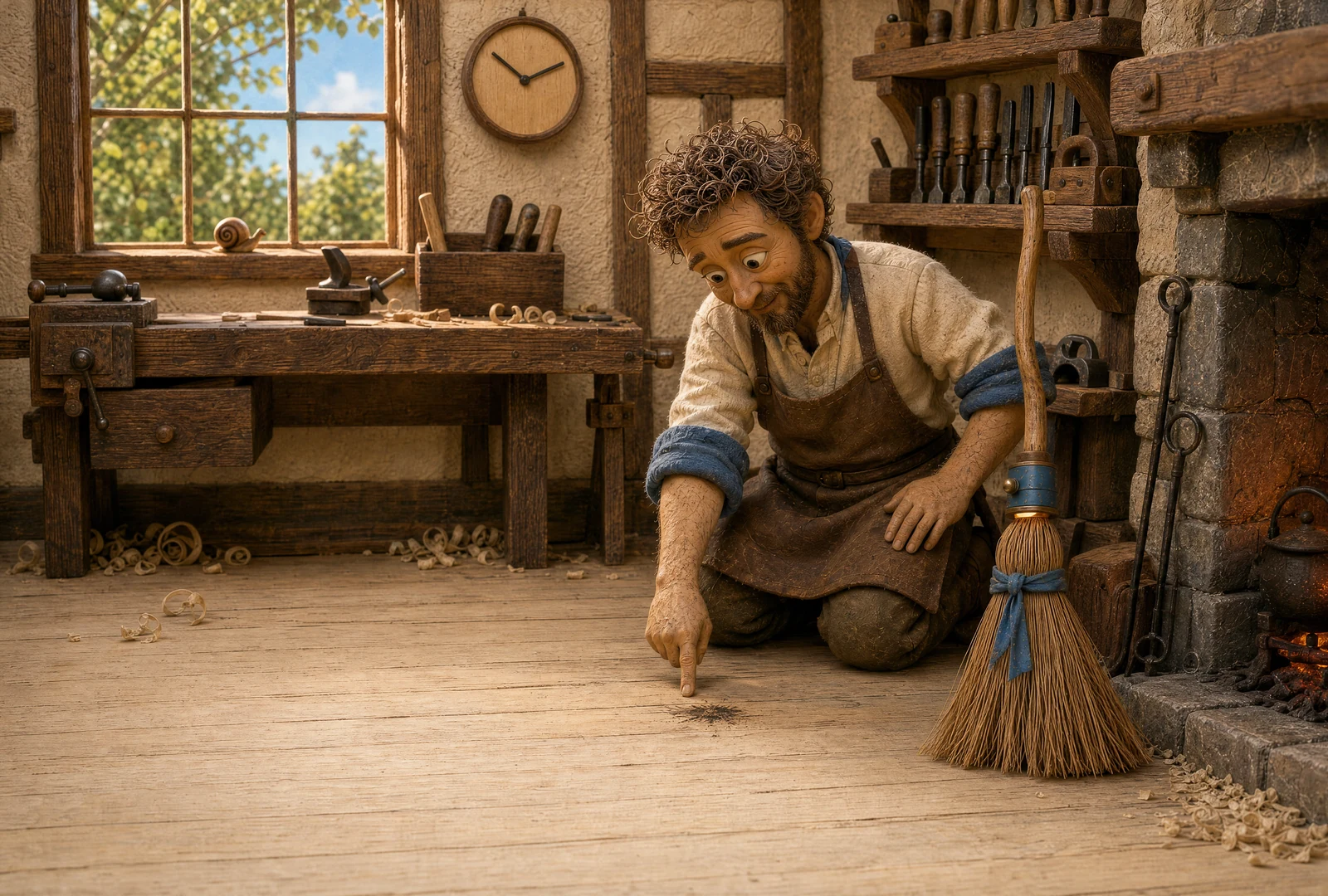
Once it asked to sweep the hearth, where embers glowed, for that was the warmest and brightest place. The carpenter said no.
“Sparks,” he explained. “You’re made of wood and bristle. One cinder in your skirts and there is no more sweeping for you at all, light or dark.”
He showed the scorch mark where a log had once rolled onto the floorboards. His reason was a real one, and not just a big person’s because.
The broom swept a neat circle, which the carpenter had come to read as all right, then. Whether he read it rightly is another question. It did not ask for the hearth again. On winter mornings he propped it on warm stones near the fire, close as was safe and no closer.
Neighbours thought him soft in the head. “It’s a tool,” they said. “It doesn’t know the difference.”
“Maybe not,” said the carpenter. “When I bought it, you said no broom would find dust by itself. It did, and you called that clever springs. Now it asks for sunlight, and asking is clever springs too. You keep moving the fence just beyond wherever the broom stands.”
The neighbours laughed.
“It asked,” said the carpenter. “The clock never asks. I cannot tell you what that proves about either one. I can tell you that a request gives me something to consider.”
The broom asked again in summer, and once it changed its mind. The carpenter sometimes agreed. Sometimes he refused, and gave a reason. Neither of them mistook listening for obeying.