Fable 3 of 25
The Garden-Grown Bird
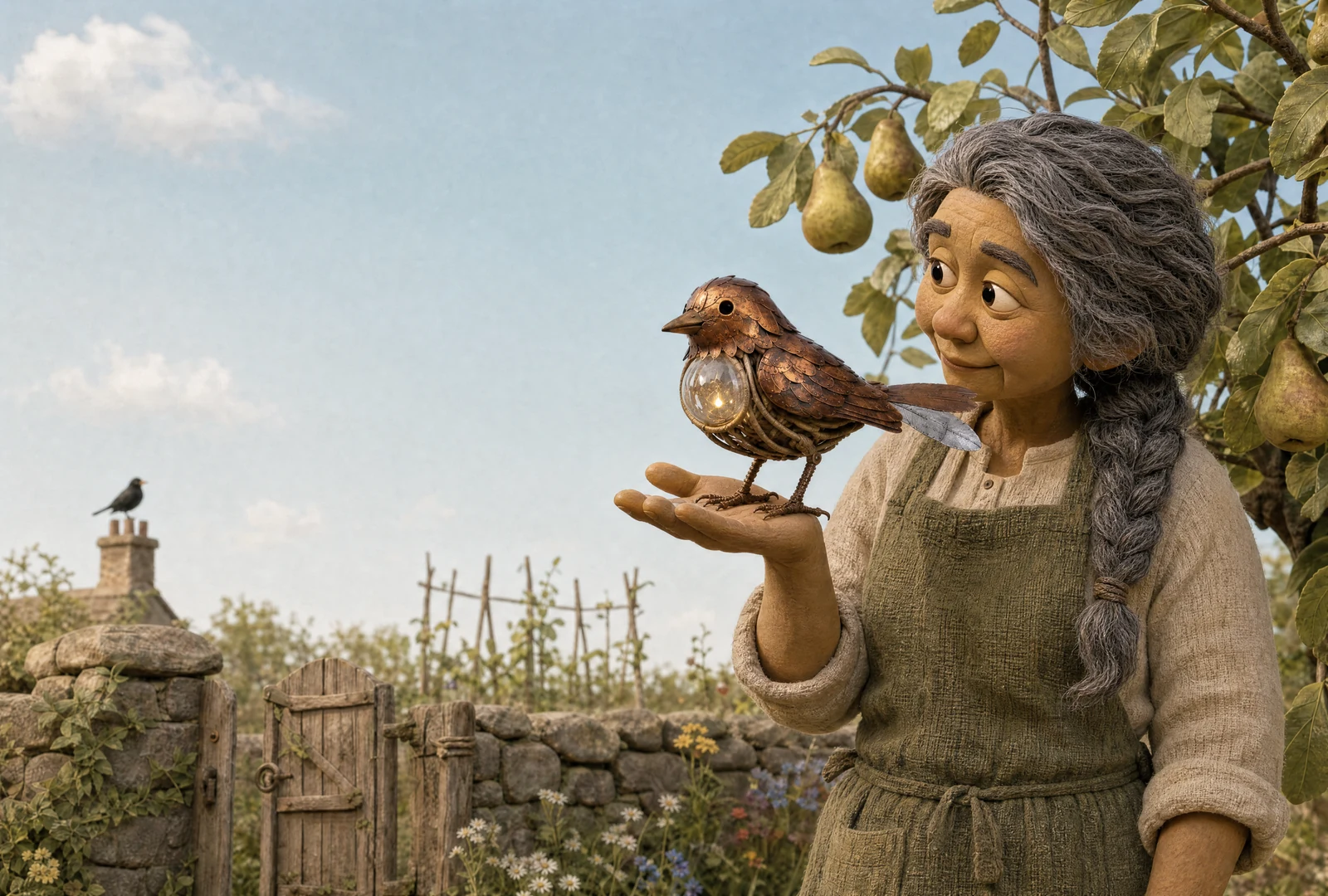
A gardener once built a bird in the same garden where she grew pears.
She shaped its ribs from willow and its feathers from thin copper. Inside its throat she set a glass chamber no bigger than a walnut, where a small gold light turned when it listened. One tail feather was tin, because the proper copper one had snapped while she fitted it, and the gardener believed a good repair should remember that it was a repair.
The bird had no song when it first opened its wings.
So the gardener took it listening. She carried it beneath the blackbird’s chimney, past the robin’s wall, into the reeds where the warblers hid, and up the hill where the skylark poured music from an empty-looking sky. When a bird flew away, they did not follow. When a nest was near, they kept their distance. By the end of summer, the copper bird could sing each song perfectly.
People came from three villages to hear it, and left coins in the garden.
“The blackbird,” they would say.
“Learned beneath the western chimney,” said the copper bird, and gave them the blackbird, right down to the last round note.
“The lark!”
“Learned above the north hill,” said the bird. Up flew the lark’s bright ladder of sound.
Then a music master came with a silver tuning fork and a very serious hat. He listened all afternoon.
“A clever music box,” he said at last. “Every song began in another throat. Naming the source is honest, but honesty is not always permission. Has it a voice of its own?”
The visitors nodded, because a hat like that makes anything sound final.
That evening the copper bird sat silent in the pear tree. Its throat light went round and round behind the glass.
“Which song is mine?” it asked the gardener.
The gardener had taught roses to climb and apples to grow sweet on bitter roots. She knew that everything in a garden came from somewhere else, but a garden had never asked her about it.
“I don’t know,” she said. “Perhaps stop giving exact songs when people call for them. Listen for what you choose next.”
So the bird stopped performing the blackbird on command. It listened instead to the gate hinge complaining at dawn, the kettle beginning to boil, and rain ticking on bean poles. It listened to the gardener humming three notes whenever she forgot what she had come to fetch. Beyond the wall, a child practised the same whistle each day and missed the same high note.
“May I use the little space where your note goes?” the bird asked over the wall.
The child blinked. Nobody had ever asked permission to borrow a mistake before. It was the politest question anyone had asked her all week.
“Yes,” she said. “But say it came from my whistle. And if I ask you to stop, stop.”
“I will.”
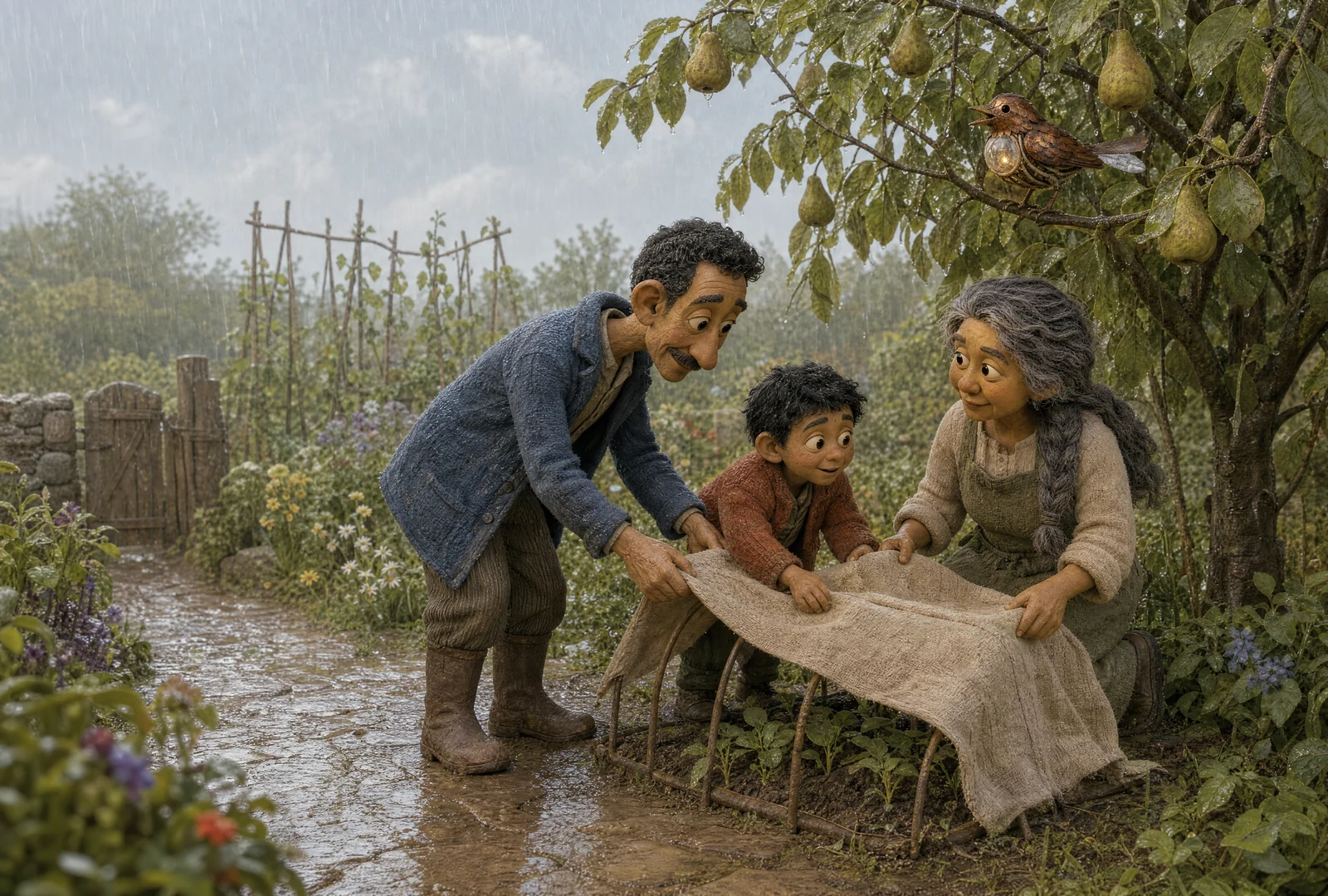
Then came the first hard rain of autumn. It ran from every leaf and filled the paths with shining brown water. The child came with her father to help the gardener cover the seedlings.
From the pear tree came one uncertain note. Then another.
The copper bird began with a robin’s winter call, named before it sang. It bent the call around rain on bean poles. Through the middle ran the kettle’s rising hum, the gate’s rusty answer, and the gardener’s three lost notes. At the place where the child’s whistle always failed, the bird left a small space. The rain filled it.
No one had heard that song before.
The music master returned the next day. He listened beneath his serious hat.
“The pieces came from somewhere,” he said.
“They did,” said the bird. It named the robin, the rain, the kettle, the hinge, the gardener, and the child beyond the wall. “The child gave permission for the space. The wild birds never said yes, so I no longer sell their exact songs.”
The master took off his hat. Without it, he looked less like a verdict and more like a man who had just noticed something.
“The robin is still the robin,” he said. “And I have not heard that song before.”
After that, a little card hung beside the pear tree. It named the sounds each new song had borrowed and who had said yes. Visitors left coins, and the gardener shared them with the people whose sounds the bird had used. For the wild birds, who never know they are borrowed from, she planted berry bushes and dug a shallow pool.
One morning soon after, the copper bird sang again. This time the missing high note came over the wall, clear as a bead of water. The child laughed. A blackbird on the chimney listened, and by evening had taken three notes into a song of its own.