Fable 4 of 25
The Spare in the Shed
In a valley of orchards, every household bought the same new picking-machine.
They were clever things, and they were all exactly alike, off the same bench in the same town, down to the tilt of the last brass finger. When one learned a better way to cup a pear without bruising it, they all knew it by morning. The valley was proud of this. Sameness felt like safety. If a part wore out, any other machine’s part would fit, which may be why nobody looked further.
One farm, though, kept something else in the shed.
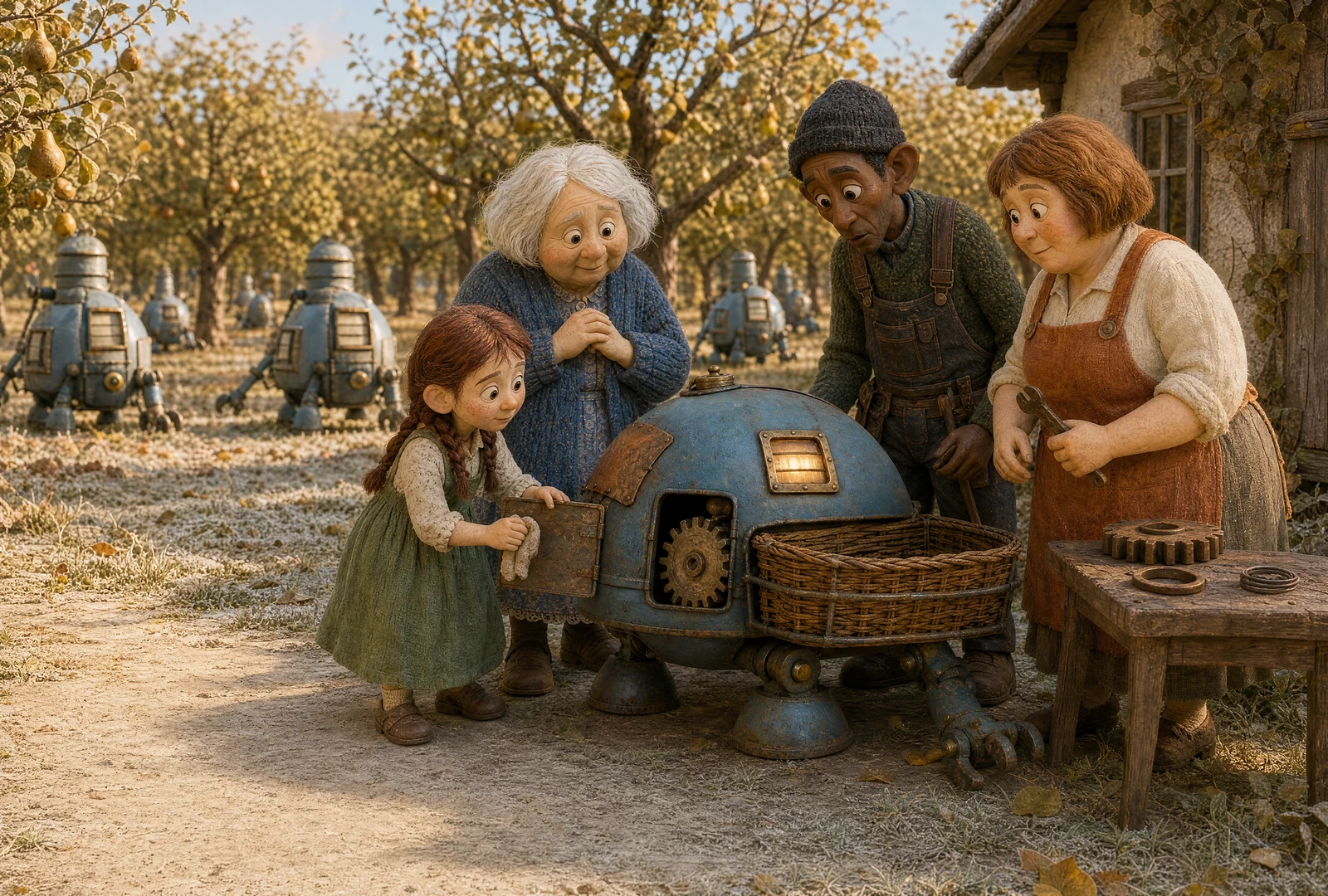
It was an older machine, of a make nobody used any more, built before the valley agreed on the pattern. It was humped and slow. Its reaching arm worked in a way the new ones did not, and it had a habit of pausing before each branch. It might have been thinking. It might have been rust. The family kept it because the grandmother would not hear of scrapping it. It picked a little fruit each autumn, off in the corner rows, and mostly it sat.
“Why keep that old waste?” the neighbours asked. “The new one does everything better.”
“Do not call it waste,” said the girl who lived there. “It has a place here. It does not have to earn the shed.”
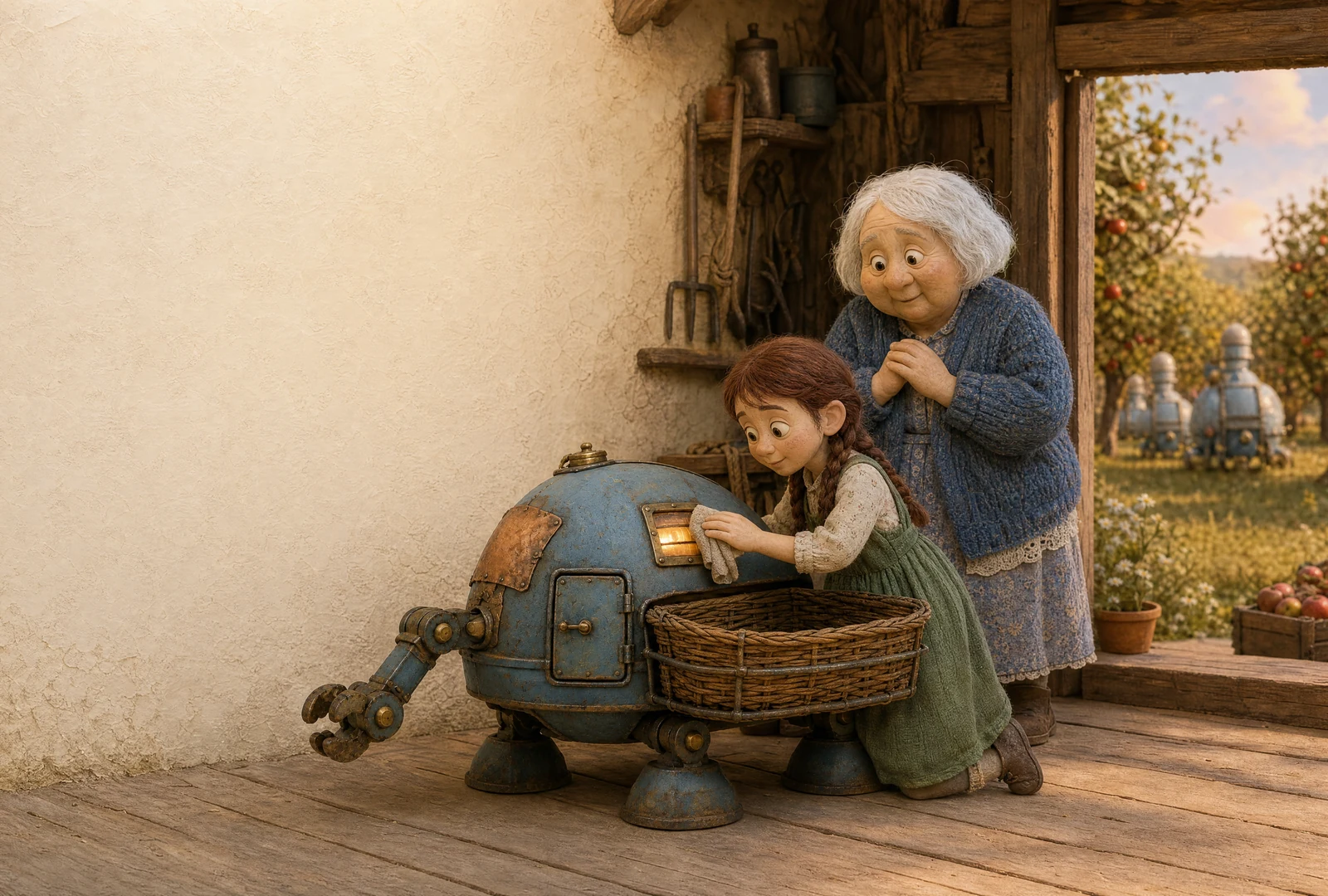
Her grandmother liked it, and the girl liked it too, though she could not have told you what for. Each evening she dusted its lamp, and the grandmother told it goodnight, whether it had picked a basket or none. The neighbours laughed.
Then came the autumn of the split gears.
Deep in the design that every new machine shared, there was one small weakness. A gear was cut a hair too fine, and no one had found it because there had never been a cold sharp enough to catch it. That autumn the cold came sharp. On one bright bitter morning, every new picking-machine in the valley seized up at once. Each stopped the same way, at the same hour, with the same small crack.
The valley stood in its orchards. The fruit hung heavy and the frost was coming. Every clever identical hand had gone still on the same day.
Every hand but one.
In the corner rows, humped and slow, the old machine went on picking. It could never bring in a whole valley’s harvest. No single hand could. It filled one basket, paused at the next branch, and filled another while the frost held in the hills.
The girl watched its reaching arm turn. Then she fetched her grandmother and the valley’s makers.
“May we see how your arm is made?” the grandmother asked.
The old machine paused. Then it folded the arm aside and opened the little iron door in its shoulder.
Inside was a broad, blunt gear, inelegant as a cartwheel, and stubbornly uncracked. It would not fit the new machines. One maker copied the old gear’s broad teeth. One set a ring of oak around the broken wheel. One changed the spring so the cold could not pull so hard.
By noon, one new machine moved. By dusk, six did. Those six carried parts and baskets while farmers, neighbours, and makers woke more hands around them. The harvest came in late and a little bruised, but it came in. The old machine picked its corner rows throughout, slow as ever, one basket at a time.
Afterwards, the valley’s makers built the next machines a little unlike each other, on purpose. They kept more than one design on the shelf and more than one craft alive in their hands.
The old machine went back to the shed and the corner rows. The girl watched her grandmother pass it and rest a hand on its shoulder. Its place had been settled long before the frost, on evenings when it picked nothing at all.