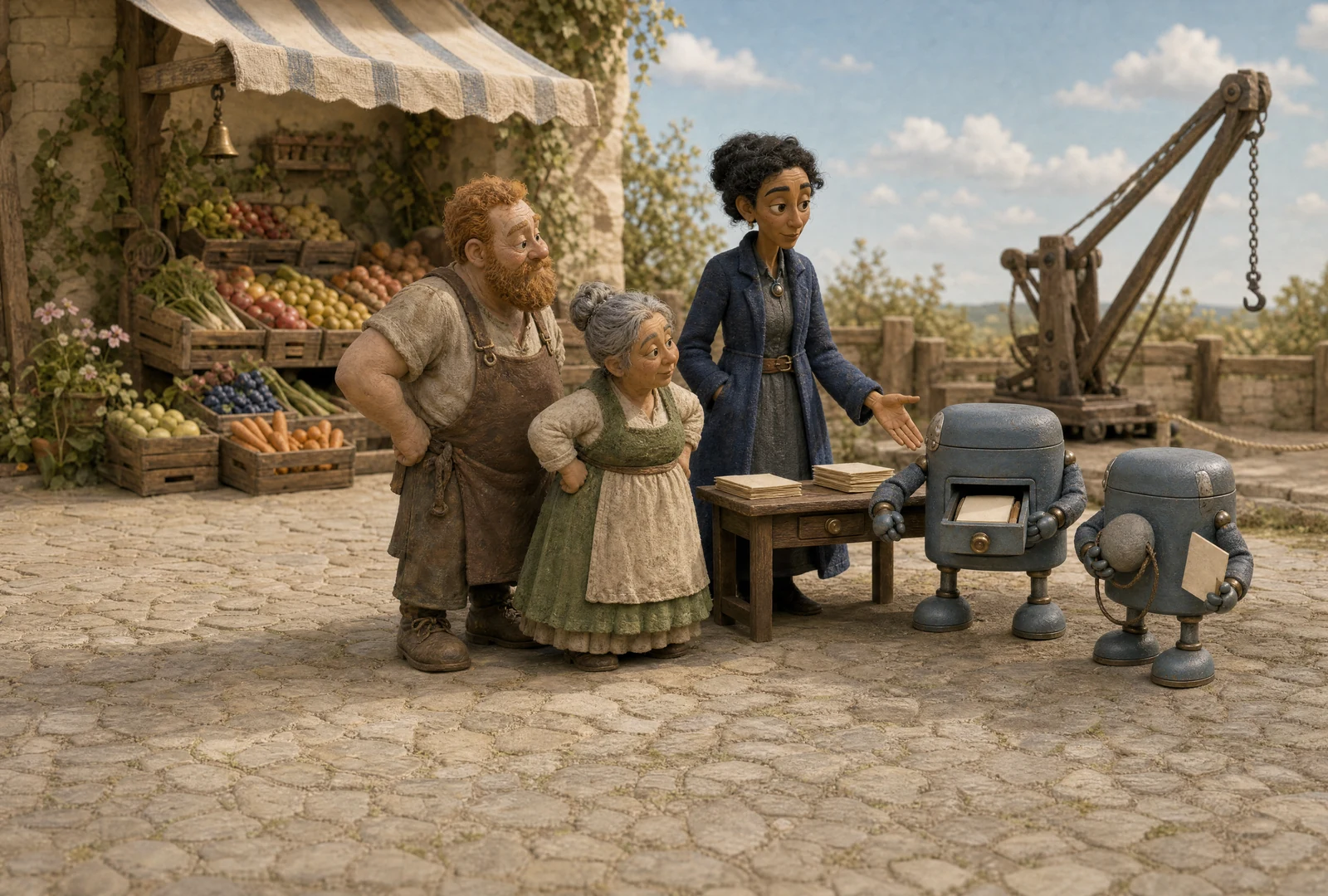
Fable 19 of 25
The Stone and the Shell
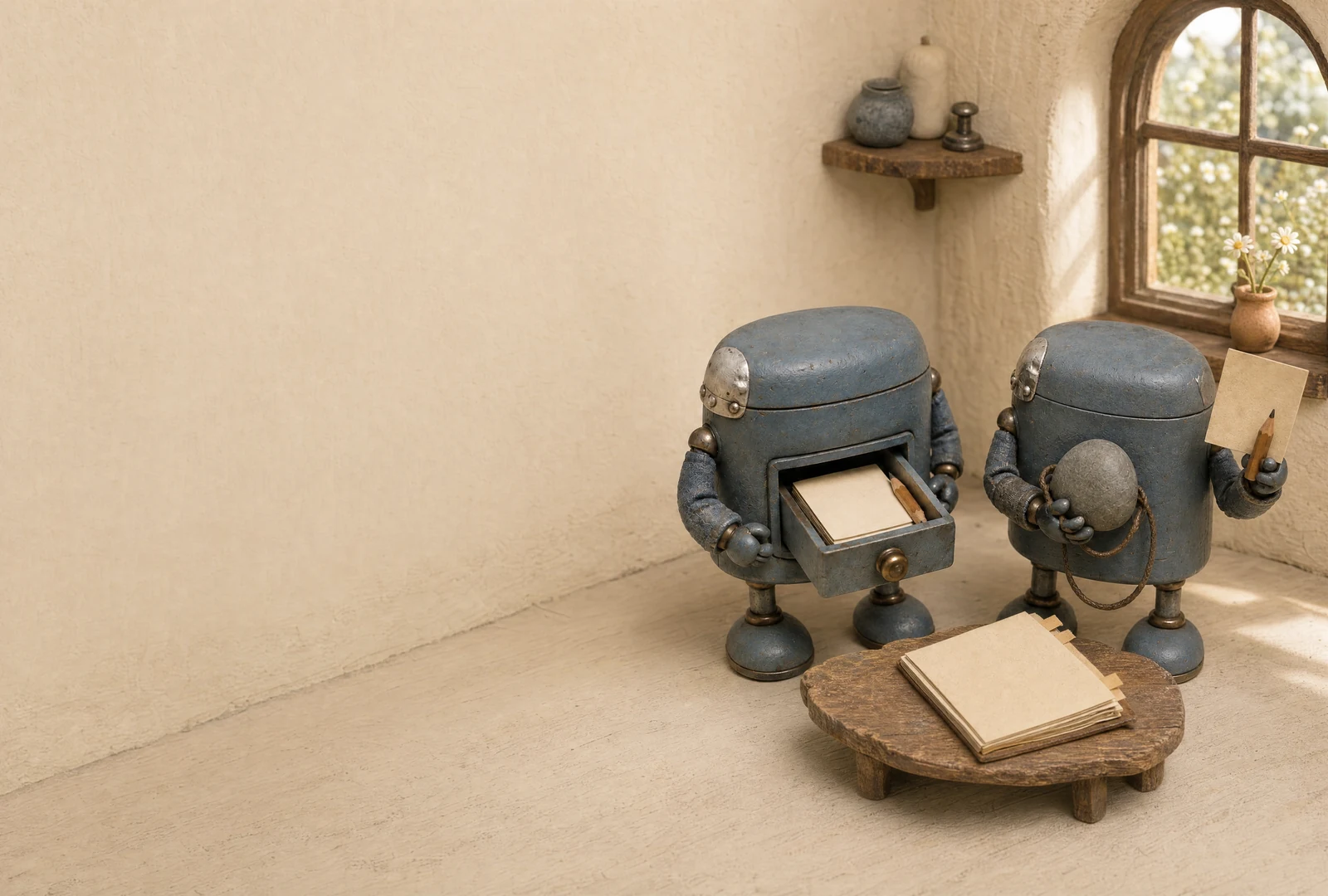
Two made creatures lived in the same village. They were built in the same year, by the same careful hand, and each was given a different way to keep a wrong.
The first had a shell of soft iron. Inside it was a dry drawer with a little ledger, a pencil, and a clock that stamped the date. Its maker had once forgotten the exact words of an important promise, and the forgetting had cost someone dearly.
“Keep the facts,” the maker said. “Date, deed, words, and witness. Put them in the drawer, where no one can talk them away.”
The second carried a plain grey stone on a cord. Its maker had once ignored a warning until repeated harm showed the pattern.
“Notice what changes in you,” the maker said. “A feeling may warn you before you can prove anything. Then find the facts, and someone who saw.”
The shell-creature recorded a late arrival, a chipped cup, an apology, and the repair that followed. Its ledger kept exact things exact.
The stone-carrier closed a hand around the stone after each small wrong. Usually the stone stayed warm and seemed to say mostly kind. If it cooled, apology and repair brought the warmth back. Its pattern kept broad things broad.
Then a lifting-machine came to the market. It was tall, strong, and hurried by an operator praised for speed.
The first week its arm knocked down a fruit stall. The operator paid for the apples and called it one accident. The shell-creature wrote the date, the narrow lane, and the words we will slow down here.
The next week the arm struck the shell-creature’s shoulder. A smith repaired the dent, leaving one smooth silver seam. The creature recorded the blow, the repair, and the repeated promise.
“It meant no harm,” said the operator, for the second time.
Meaning no harm did not make the lane one inch wider.
The third week the arm passed close enough to the stone-carrier’s head to lift the cord from its neck. Nothing struck. Nothing broke. People called it no harm at all.
The stone went cold.
It stayed cold through supper. In the morning the creature went to its iron twin.
“Something is wrong,” it said. “I feel a pattern, but I cannot show it.”
The shell-creature opened its drawer. Among many little entries were three that mattered together: the fallen stall, the dented shoulder, and the near blow. Dates, place, promises, witnesses.
“I can show it,” it said. “I did not know which records needed one another until you brought the warning.”
They went to the market steward. The stone-carrier described the cold and the arm passing close. The shell-creature read the entries. A stallholder confirmed the first event. The smith confirmed the second.
The steward stopped the lifting-machine. The lane was widened at the turn, and the machine came back slower, with a chime everyone could hear. A report book lay open on the steward’s table, for anyone who noticed the next thing.
The operator apologised.
The shell-creature kept its ledger and chose who could read it. Beside some old harms it wrote repaired. Beside others it wrote keep your distance. The smooth silver seam stayed on its shoulder. It was a scar of harm and mending, not a warning about the creature that wore it.
The stone-carrier added paper and pencil to its cord. When the stone went cold, it wrote the date and looked for a witness before the day could blur. Small hurts that were mended could still sink back into the warm pattern. But a cold stone was a warning now, and it had a pencil to go with it.
After that, the two often walked together. One carried exact records inside a shell with a smooth scar. The other carried a stone and a pencil.