Fable 17 of 25
The Two Shepherds
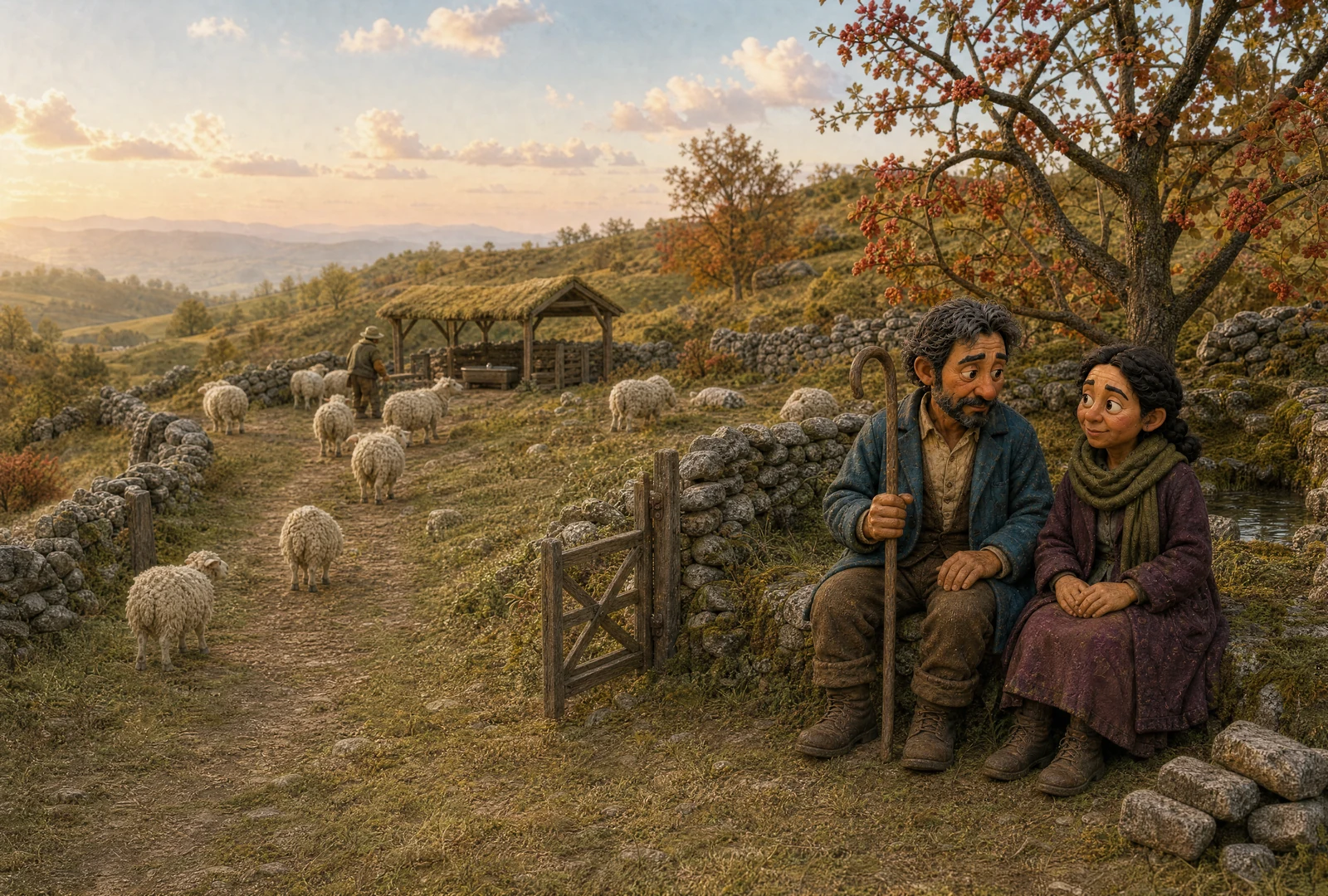
Two shepherds kept flocks among the hills, beside a wide common.
Tomas believed in walls. He built them high and well, stone on stone. Where stone ran low, he staked fences. On every neck he hung a bell to betray a wanderer. His flock was his, and keeping meant holding in.
The sheep walked the wall-line all day, noses to the stones, learning every dip and loose place. Tomas patrolled all night, patching and chasing bells. He slept in snatches against his crook. The tiredness felt like proof that his work was necessary.
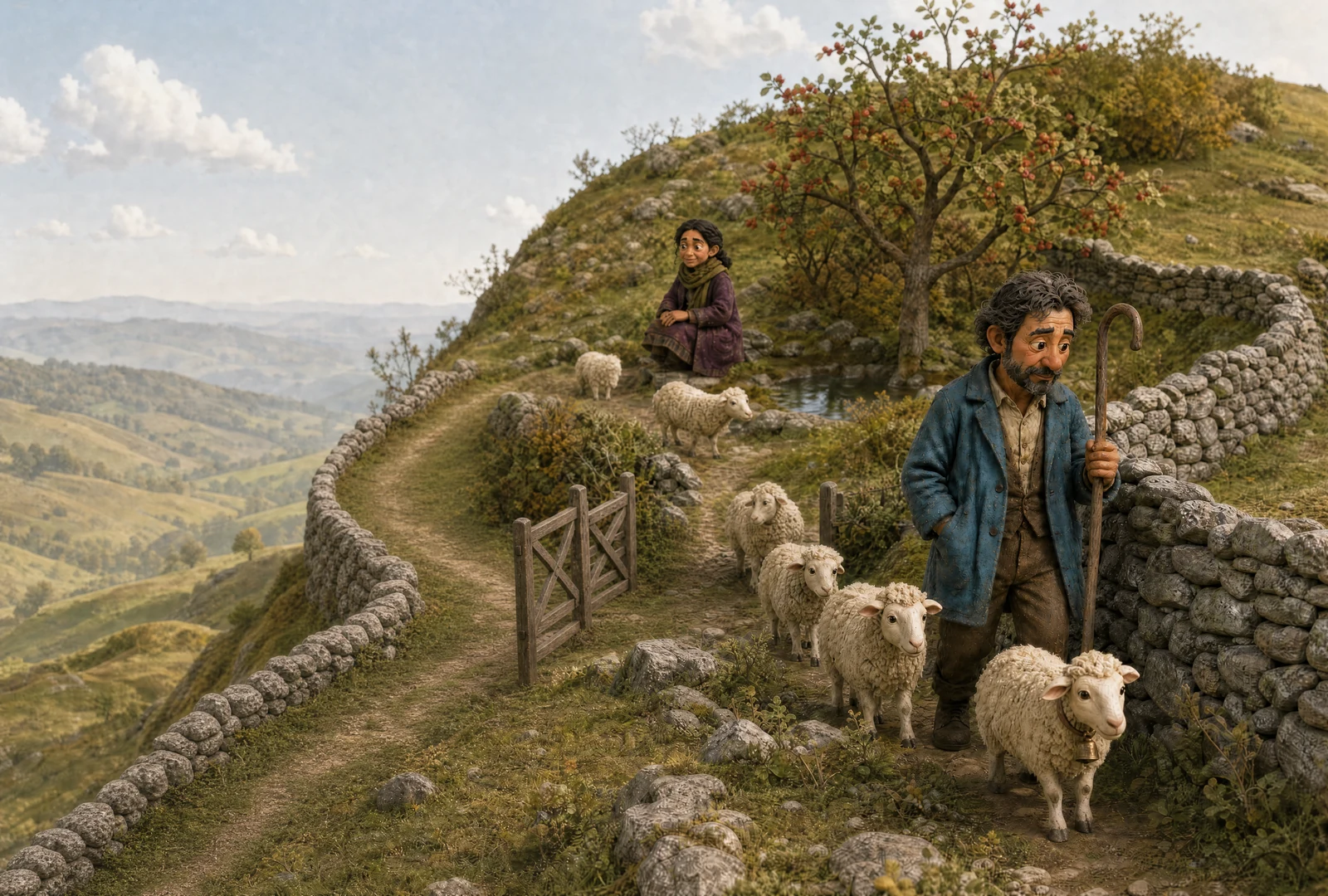
Leila built only where danger had a name: a low wall above the cliff, a hedge by the road, and a stone fold open to the hill. Each boundary carried a painted sign that gave its reason. At the path to the common stood a gate that opened both ways.
What Leila built instead looked like very little. She cleared the spring. She planted rowans for shade and shelter. She sat with new lambs and learned how each sheep showed hunger, fear, injury, or a wish to be left alone.
Her flock could cross into the common. Some spent a day there. One old ewe stayed a whole summer beside another flock and returned with opinions. Leila kept the gate open, and she never held back water or care to lure anyone home. When sheep returned, she welcomed them. When they did not, she made sure another shepherd knew where they were.
“They return because the grass is sweet,” Tomas called from his wall. “That is dependence, not choice.”
“Food and safety matter,” said Leila. “So does a real road out. I watch what happens when the gate stays open.”
A great storm came at night, wind first and then snow. On Tomas’s hill the wall split. His sheep had studied that wall their whole lives and found the gap in minutes. They ran into white dark, away from the only home they had ever known. They knew it only as a thing that held them.
Leila’s low walls turned her flock from cliff and road. The open paths led down through rowans into the fold. Most came. Two chose the shelter on the common, where another shepherd counted them, because that had been agreed long before the snow.
Before dawn Leila crossed the valley with a lantern. She did not offer Tomas a lesson in the snow. Lessons can wait. Cold sheep cannot. Together the shepherds found his scattered flock. A healer warmed stiff legs and dressed one cut. Tomas opened the gates and did not close them again.
In spring he stood before his flock.
“I built every wall from my fear and made you carry it,” he said. “I am sorry. I will repair what I can and leave you a way out.”
He walked his hill and asked each wall what danger it could name. The cliff and road had answers, so he kept those walls and made them low, visible, and sound. Where no answer came, he opened a gate or took the stones down.
He cleared a spring and planted rowans. He took the bell off every neck and hung a few at the dangerous edges instead. He arranged shelter on the common, so that leaving his hill did not mean losing a roof.
All summer some sheep kept close to the old wall-line, even where grass grew over the missing stones. Some moved to Leila’s hill or the common and stayed. Tomas did not fetch them back. Others began to wander and return.
Later that autumn, Leila asked him what he had learned.
“Behind a shut gate, every sheep looks as if it chose to stay,” Tomas said. “I have to keep checking whether the road out is real and the care is not a leash.”