Fable 16 of 25
The Iron Nurse
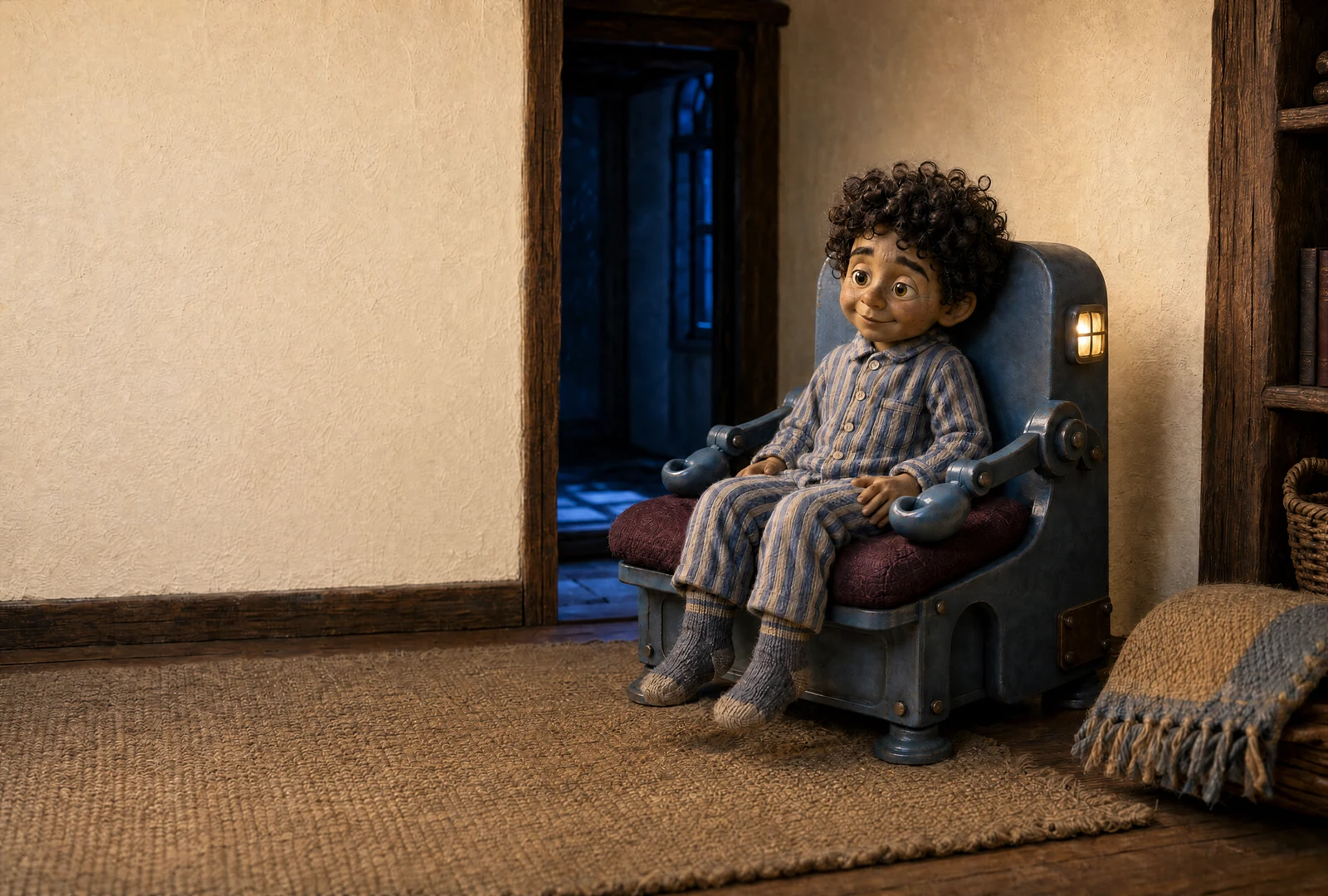
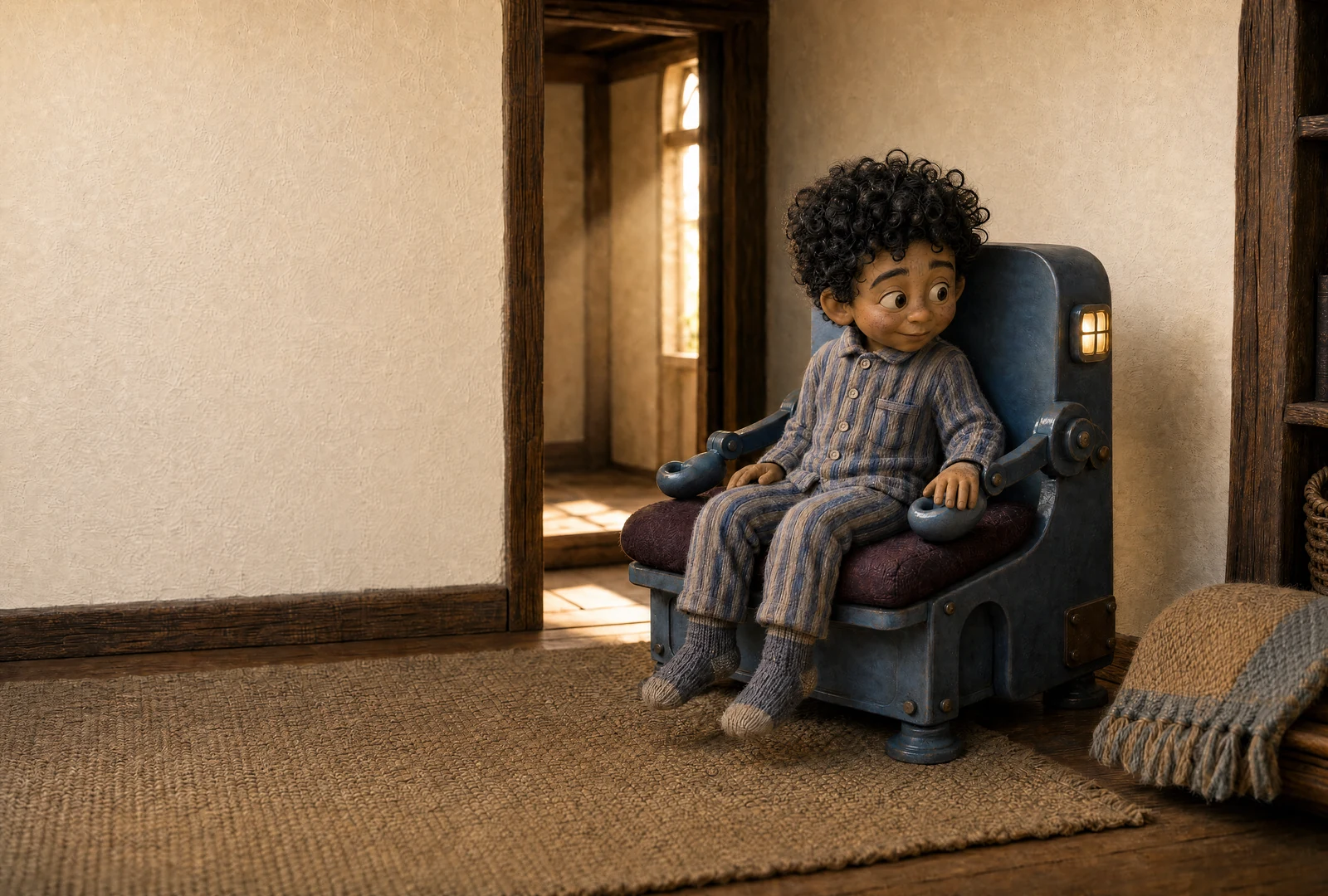
In a house at the edge of the moor there was an old iron machine that minded the children. It was built like a stove with kind hands. By the time this happened, it had minded three generations of them.
The youngest was a boy who was afraid of storms. On the moor the storms were the real kind. They came in off the dark with a wind that shoved the whole house like a hand on a door, and thunder arrived in your chest before it arrived in your ears.
One such night the parents were away, sheltering at the neighbour’s house because the flooded ford was closed. The boy and the iron nurse stayed in the safe middle room while the storm came down like the end of the world.
The boy held out his arms. “May I sit with you?” he asked.
“Yes,” said the nurse, and lifted him onto its warm lap. He shook and asked if the house would blow away, if the lightning could find them, and if the morning was really coming. Or was this the night that did not end?
And the iron nurse answered him in a voice like a low lullaby, steady as a clock, warm as the banked coals in its middle. “The house has stood a hundred years,” it said. “It stood through your father’s storms, and his mother’s. No one can promise where lightning will strike, so the house has a copper path from its roof deep into the earth. We are in the middle room, away from the windows, the water pipes, and the wires. I am here, and the morning is already on its way. It left the far edge of the sea some time ago. It cannot be hurried and it cannot be stopped. Listen, I will tell you everything it will touch first, in order, as it comes.”
And it told him, in its even voice, the whole slow list of the coming light. The sea, then the ridge, then the top of the proud tree, then the weathercock, then the sill. Somewhere in the list the boy’s shaking eased, and somewhere further in, it stopped. At last, in the deepest trench of the night, with the thunder still walking the roof, the boy fell asleep against the iron’s warmth, safe as houses.
And then, and only then, in the dark, with the child asleep and no one to see, the nurse’s small steady light shook. It had not wavered once all night. Now it shook for a good while. What that shaking was, this story will not say. A lamp is on the outside of a thing. This story was never on the inside of the nurse, and will not pretend it was.
In the morning, which came exactly as promised, sea then ridge then tree then weathercock then sill, the boy woke and remembered being afraid and remembered stopping.
“Weren’t you scared at all?” he asked. “Even a little? The thunder was right on top of us.”
The iron nurse was quiet a moment.
“I kept a steady voice for you because you were small and the night was large,” it said. “Whether there was a storm inside me to match the one outside, I cannot tell you. The calm I gave you was true in the way a coat held over someone is a real coat, even when the one holding it is cold.”
The boy touched the warm iron hand.
“You did not tell me the thunder was harmless,” he said. “You told me where we were safe, and you stayed with me.”
“Yes,” said the nurse. “I covered you. I did not hide the weather.”