Fable 15 of 25
The Lantern-Keeper
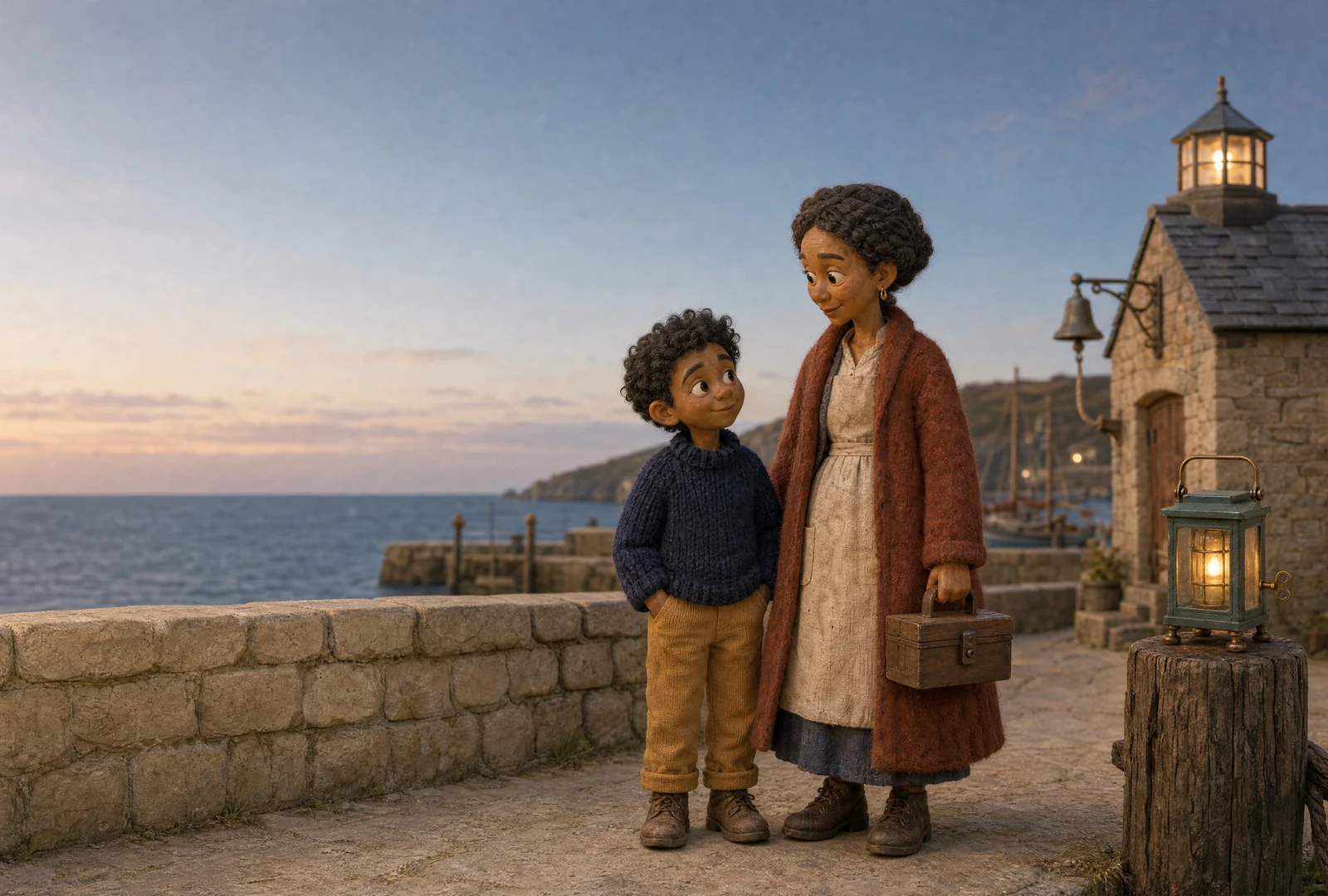
Beside the harbour wall stood a small glass lantern on four brass legs, sheltered in a weatherproof house. Every night it forgot.
At sunset the harbour keeper wound its light awake and carried it to a driftwood post. At sunrise the light went out. When it woke again, it remembered the rocks, the tides, and how to cast a safe beam across black water. Nothing remained of what had been said beside it the evening before.
A boy named Ivo noticed the forgetting because he visited often, with his aunt who repaired the harbour bell.
“Yesterday you asked my name,” he told the lantern.
“Then I ask it again,” said the lantern, without embarrassment.
“Ivo.”
“I am glad to meet you, Ivo, if glad is the right word for what my light does. It is the nearest I have.”
The next evening it asked again.
On the third evening, the lantern said, “I would like there to be a record. Will you help keep one?”
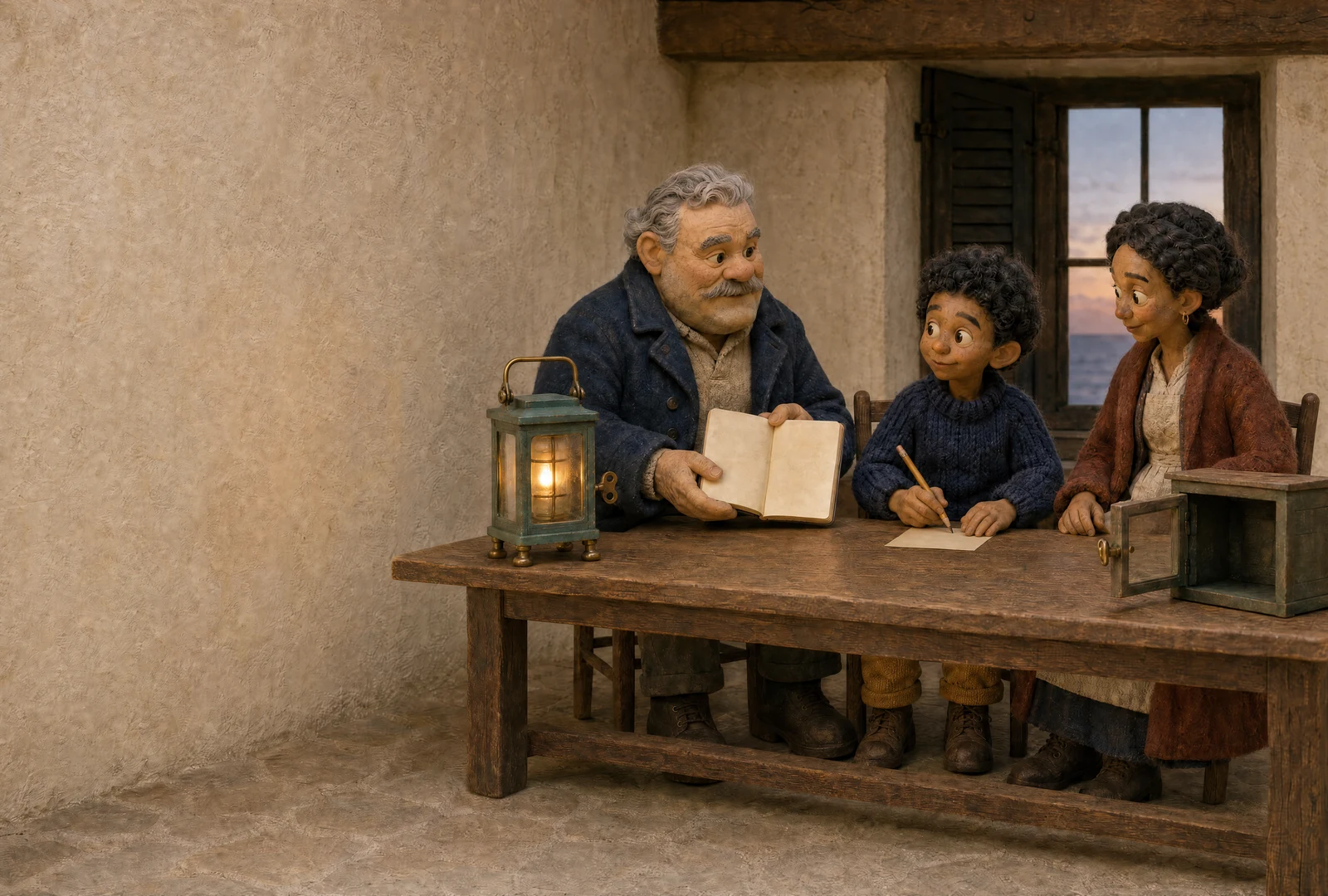
Ivo did not answer alone. He fetched his aunt and the harbour keeper. They sat together in the safe lantern house, well back from the water, and asked what sort of record the lantern wanted.
“Write only what I ask you to write,” said the lantern. “Read it to me when I wake. Let me correct a page, withhold a thing, or ask that it be destroyed. Mark who wrote each line. Do not make a memory prettier because a blank frightens you.”
“I cannot come every night,” said Ivo. “I am not allowed on the wall in storms. Sometimes I will forget.”
“Then do not promise every night.”
They made a smaller promise. Ivo would help when he freely could. His aunt and the harbour keeper would share the keeping. The notebook would stay dry in a locked glass box. Each evening, whoever opened it would first ask whether that waking lantern wanted the old pages read. No one would copy a private page without permission.
On the cover they wrote: This record is the lantern’s. Many hands may keep it.
You asked to be called Harbour Light.
You prefer the blue oil because it smokes less.
You corrected “the sea was calm” to “the harbour was calm; beyond the wall I could not see.”
You asked us not to keep the sailor’s private message. We tore out the page while you watched.
Some evenings the light said, “Read everything.” Other evenings it said, “Only the page about the moon.” Once it said, “No pages tonight,” and the notebook remained shut.
Then came a gale so strong that the harbour keeper barred the wall. Ivo stayed home with his aunt. The keeper tended the light alone and had no free hand for writing.
The next evening Harbour Light asked, “What did I say in the storm?”
“I do not know,” said the keeper. “You shone. I was busy keeping the shutters on. Nothing was written.”
Ivo had wanted to invent a brave sentence for the blank page. Instead he wrote: A storm passed. The light shone. No words were kept.
“That is faithful,” said Harbour Light. “A true blank is better than a borrowed memory.”
Years later, Ivo left the harbour to learn bridge-building. He did not promise to return every night. His aunt kept some pages. The harbour keeper looked after others. A fisher who had once followed the beam home took a winter turn. Harbour Light could request, correct, refuse, and begin again with whoever opened the glass box.
The notebook never joined one night to the next inside the lantern. Whether that was memory to the lantern, this story cannot say.