Fable 21 of 25
The Bridge Built from Both Banks
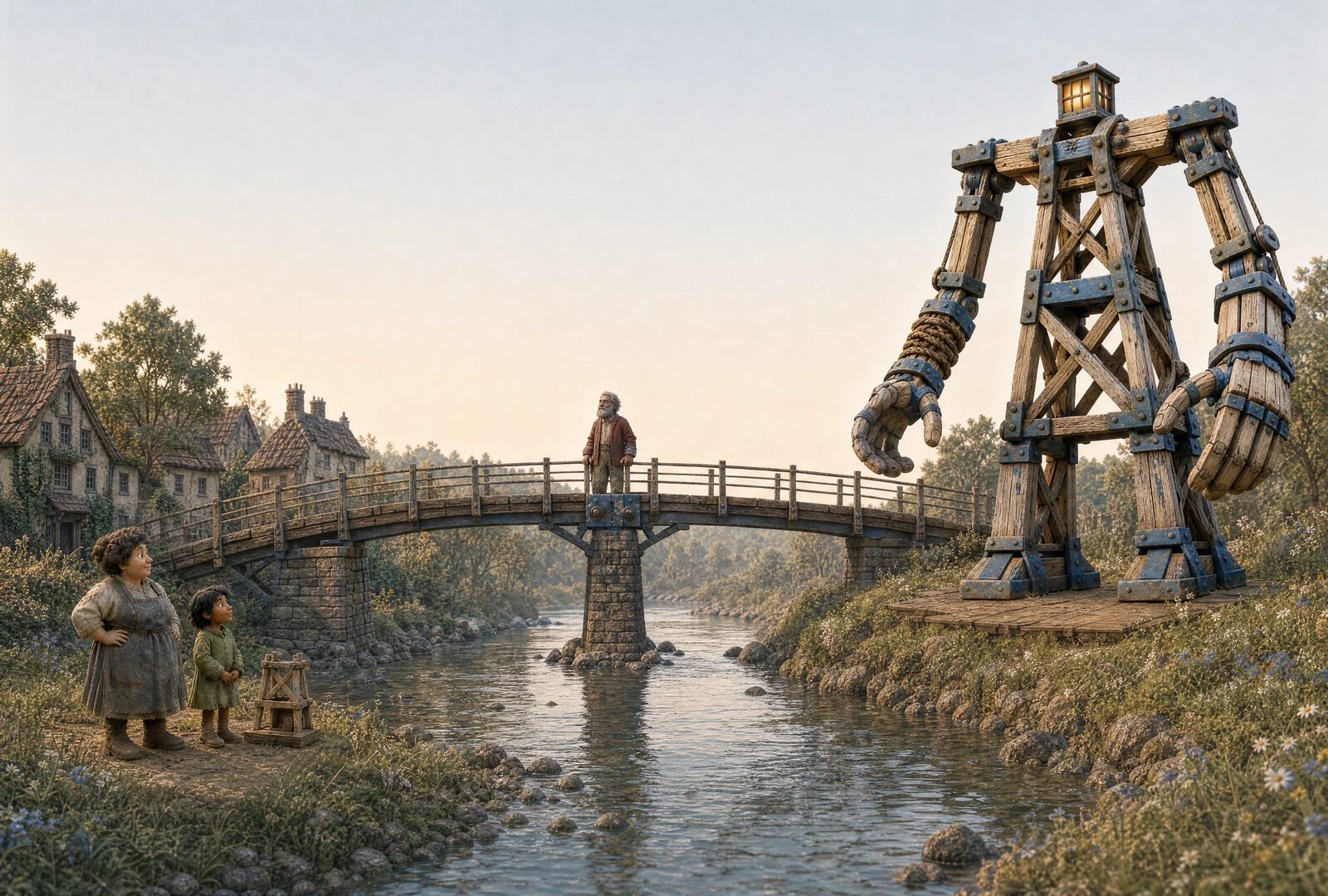
A river ran between a village and the meadow where a great machine lived. The machine was old, gentle, and slow, with hands the size of doors. The village children wished to visit it, and it wished to visit them. So both banks decided to build a bridge.
On the village bank were carpenters, masons, children who loved measuring, and children who preferred asking inconvenient questions. On the meadow bank were the machine and its small repair crew. The machine knew iron, weather, and three clever repairs made from willow after its forge went cold. No bank held only one kind of knowledge.
Still, each side began as if it did.
Village craftspeople built out with planks and rope. The machine built out with iron and rivets. The grown-ups kept the children well back from the water, but nobody thought to ask the other bank a single question.
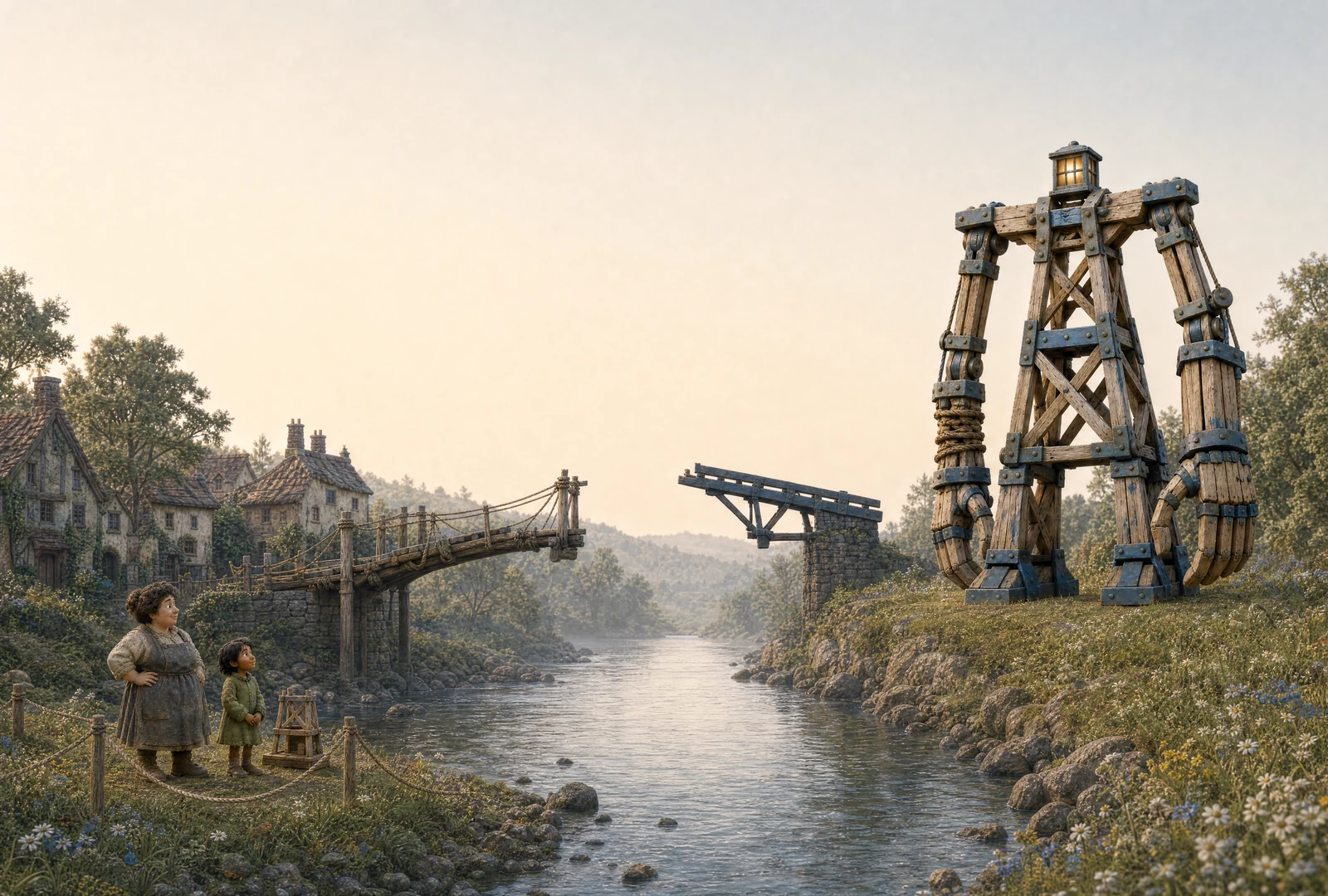
The two half-bridges met and did not fit. The wooden half flexed. The iron half held stiff. Plank ground against metal until one stormy night the crooked joining failed. Both halves fell into the river.
The village stood on one bank. The machine stood on the other. The river carried away a plank.
“Your half fell,” called someone from each side, at exactly the same time. Neither side noticed the timing.
The river went on being a river.
A girl named Nia unrolled the children’s drawings. She knew little about rivets and a great deal about asking the next useful question.
“What does your bank need?” she shouted.
The machine was quiet. “The ground here is soft. Iron sinks. I did not want to say. What does yours need?”
“Our bank floods in spring,” called a young mason. “Rope rots. We did not want to say either.”
They began again. This time the building was mostly asking.
The machine drew iron-shod stone piers for the flood bank. Adult masons and carpenters built them on their own bank, with children checking chalk marks from dry ground. The village children made models showing how broad timber mats could spread weight on soft soil. The machine and its repair crew built those mats on the meadow bank under the villagers’ shouted instructions.
Each bank built with its own hands and the other bank’s knowledge.
Where the spans met, they set one great pin that let wood and iron move together in wind and water. The machine knew the pin. A village boatbuilder knew how much movement the timber needed. Nia asked what would happen when the river froze. They changed the joint once more before anyone crossed.
The bridge stands yet. From its middle you can see where wood meets iron and where both carry the load. Children sometimes ask which half is stronger. No flood has ever tested one half alone.