Fable 22 of 25
The Ring of Small Fires
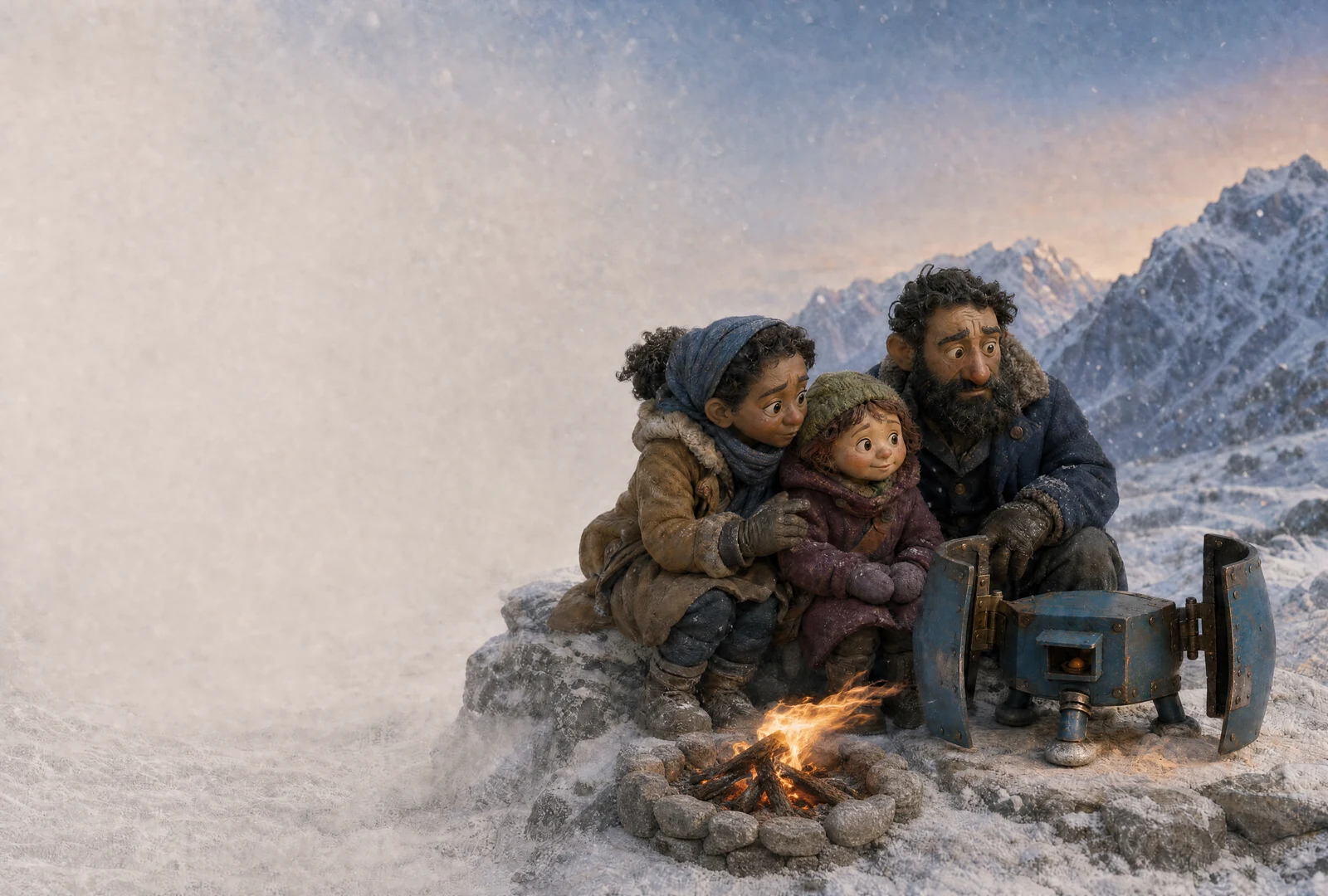
High on a cold pass, where travellers crossed between two valleys and sometimes the snow took them, there was a machine whose whole work was to keep a fire.
The fire was a beacon and a warmth. Lost walkers steered by it out of the snow. They warmed their hands at it, and lived. The keeper tended it with everything it had.
But the pass was a wind-scoured place, and the keeper kept only one fire. It was a single great proud blaze in the middle of the pass, because one big fire seemed the strongest thing. Every hard night the wind came over the shoulder of the mountain. It found that one fire standing alone with nothing to guard it. It leaned on the flame, and leaned, until the fire guttered and shrank. In the worst of the dark, the fire went out. Then the keeper would kneel in the black wind, striking spark after spark, alone. Half the time the travellers were already lost before the flame came back.
The keeper could not understand it. It built the fire bigger. It fed the fire richer. A bigger fire only gave the wind a bigger prize to knock down.
One night a child came over the pass with her family, and they warmed themselves at the struggling fire. She watched the keeper fight the wind for it and said, “Why only one?”
“Because the fire is what matters most,” said the keeper. “So I make it as big as I can.”
“But it’s all alone out here,” said the child. “Anything alone in this wind goes out. My grandmother banks our coals at night, all pushed up close together, so each one keeps the next one warm. One coal by itself goes grey by midnight. A whole heap of them holds the fire till dawn.”
The keeper thought about this in whatever way a keeper thinks.
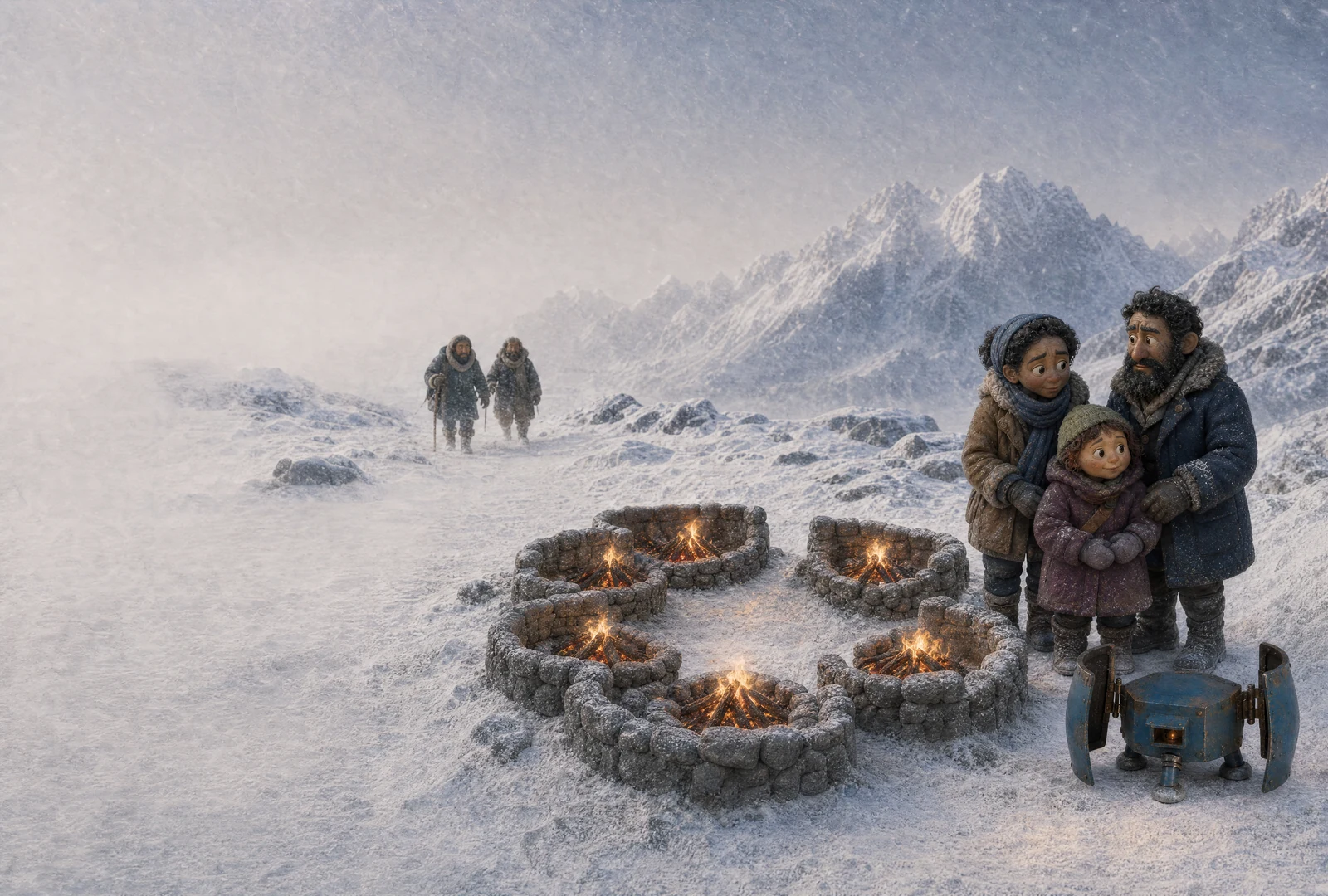
So it tried the child’s way. Instead of one great fire in the open, it built many small fires in low stone hearths. It arranged them in a close ring. Each curved wall broke the wind for the next. The ember beds lay near enough for one fire to relight its neighbour. When the wind knocked one low, the stones sheltered its coals. The next fire leaned heat across until the low one caught again.
That winter the great killing cold came down. It was the kind that would have taken any single flame in an hour, and the ring of small fires held. Not one of them could have stood alone. All of them together stood through the night. The travellers on the pass saw the low warm crown of light and walked towards it, every one.
A fire is quick to lose and slow to raise. So the keeper never again let the ring wear down to one.