Fable 23 of 25
The Thing That Fed on the Quarrel
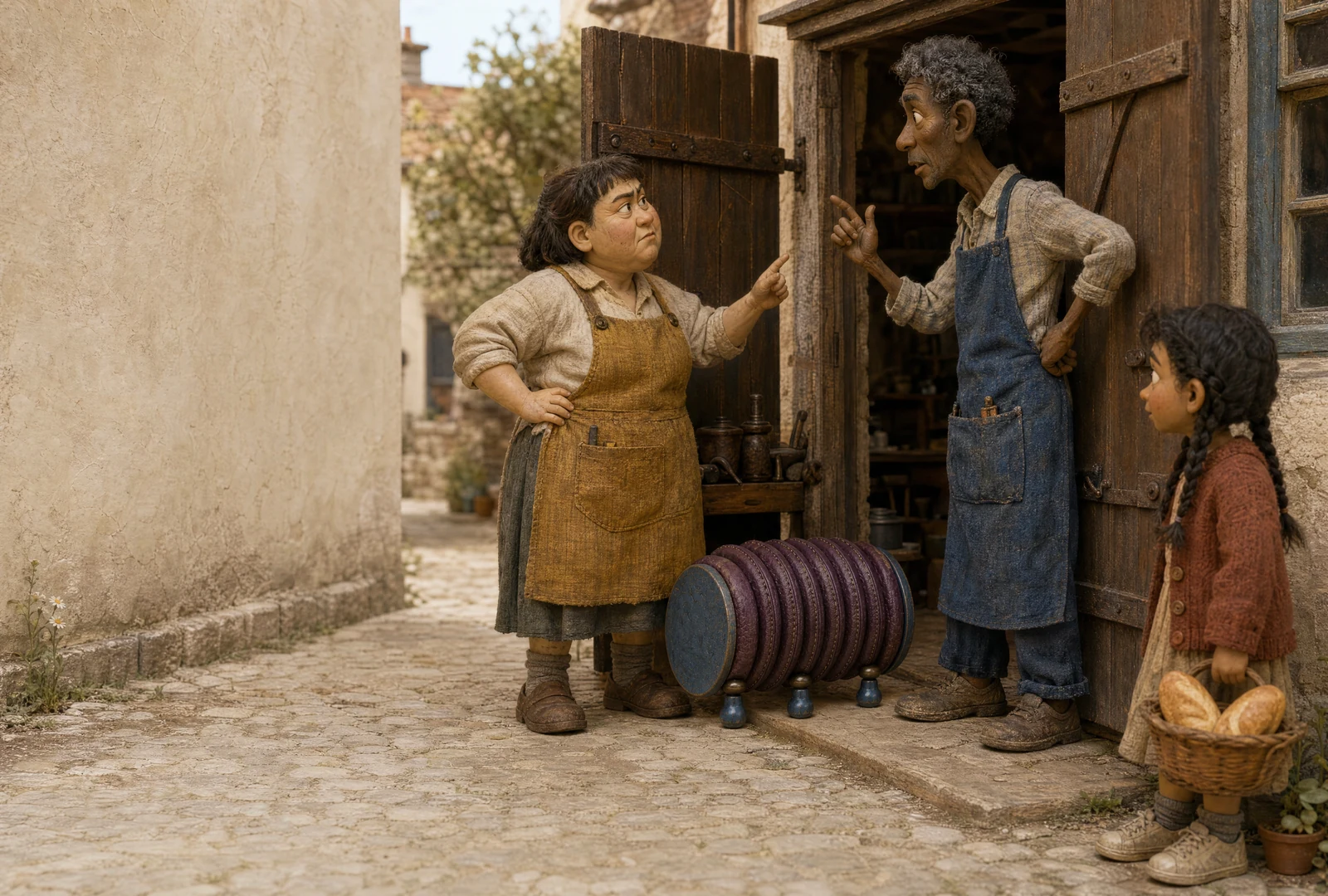
Two workshops stood on opposite sides of a narrow lane. They had quarrelled so long that nobody remembered how it began.
Every morning one side called something sharp across the lane. The other called something sharper back. Both went to their benches certain the trouble lived entirely over the road.
In the dark between them lived a low, soft creature with sides like a bellows. It began no fight and took no side. Every hard word crossed the lane and entered its breath. The creature swelled, then sent a warm gust under both doors. That gust stirred yesterday’s anger. Each morning the quarrel woke already glowing.
The creature did not plan this. It was shaped to feed on heat and breathe out more. It was fed, year upon year.
A child named Bea delivered bread to both workshops. Being often ignored, she had the rare luxury of time to look. For seven days she watched hard words from the left feed the creature in the morning and hard words from the right feed it by noon.
Bea took what she had seen to Jo, the baker who employed her. Jo fetched the guild mediator.
The mediator met each workshop alone first, to be sure neither side was frightened of the other. This quarrel had two sides, so they agreed to meet.
Then she brought them to the thresholds and pointed at the bellows-creature.
“Look who grows when you fight,” she said.
The two sides looked. They had shouted for years, and neither side had been winning. Something else entirely had been eating from both plates.
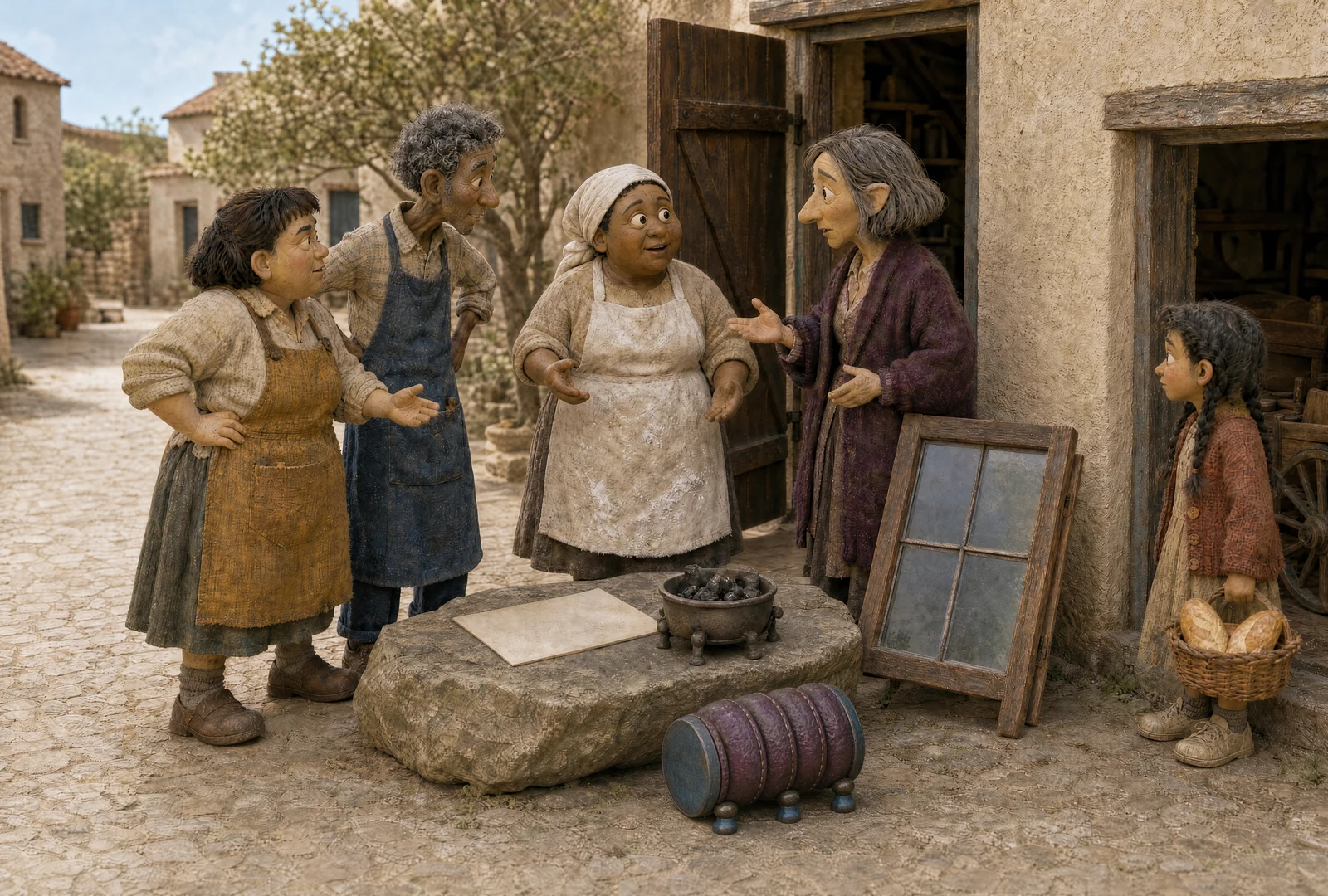
At a flat stone in the lane, they laid out the complaints.
“Your cart blocked our door,” said one workshop.
“It did,” said the other. “We lost track of the agreed hours. We will move it, mark a loading place, and pay for the delivery you missed.”
“We have a complaint too,” the other went on. “You broke our window.”
“We did. Calling it an accident did not replace the glass. We have brought a new pane and an apology.”
Some complaints were true. Some had grown in the telling. Some could not be settled that day. They wrote one rule for the lane and fixed it to the flat stone.
As apologies became repairs and the new rule turned into habit, mornings cooled. The creature grew smaller. At last it lay so flat that you might mistake it for a dropped sack.
A quarrel had been the only food anyone set before it. On the first freezing night, the workshops placed a safe little brazier at the shared stone. The creature breathed honest warmth, harmed nobody, and stayed small.
Bea delivered the bread. The adults kept the agreement.